Facebook!

Twitter

Tumblr


Showing posts with label RED WINE. Show all posts

20080710

Out of shape at 33


Out of shape at 33 is one of those targeted ads you see on Facebook. They are insidious, but ultimately they are an acceptable trade-off for many Facebookers (you reveal your birth date so your friends can get birthday reminders in order to buy you a drink; you suffer thereafter a torrent of tanned, toned abdominal muscles that call you out by your age, peppering you with reproach about your wanning fitness the day after your birthday).

But they are only annoying as they are effective. Internet incantations of laziness prompted me to post this, after all.

Finally, after six weeks of inactivity and silence, I am posting. Finally, after a marked increase in bottles of calorie-rich wine (that just so happened to match my sudden hike in vacation time, which always carries with it wanning physical activity)!

And, sure enough, this post comes after a time away in which I celebrated my 33rd birthday. So that's me who's out of shape. There's no contest: I really am out of shape at 33. At the very least, this blog space is a testament to it.

SEXY, STREAMLINED AND SAVVY IN AN ALTERNATE UNIVERSE

I bring up Facebook mostly because I'm on it and I'm on it a lot. (Oh, don't act surprised. You're on there too. So is Steve De Long of De Long's Wine Moment. So is David McDuff of McDuff's Food and Wine Trail.)

Need more proof of how much I'm on there (other than the sad abs-in-my-face story)? Here:
MY NEW WINE BLOG ON FACEBOOK

Yes, I've been somewhat busy with a new foray for Weingolb set in an exciting collaborative environment: it's called the Facebook page.

Here's what a Facebook page brings:

  • public access to everyone on the Internet (notice that I didn't say it was a Facebook profile!) so it's not restricted to registered Facebook members (though Facebookers do get the added benefits of an improved social networking experience, which is something that has entirely changed the raison d'être of wineblogging for me -- thanks especially to BrooklynGuy, Bill "the Caveman" Zacharkiw and Joe from Joe's Wine

  • a multi-purpose wall for writing comments, wine reviews or comments on wine reviews (or...?)

  • a discussion board for enhanced development of forum topics

  • the easiest photo and video upload tool on the planet -- accessible to all, whether you are a reader, administrator, weindoktor or plonkpupil

  • built-in RSS and news feed features for reliably keeping track of updates

  • event creation -- though it's a bit stiff and I admit could be better -- and the usual web 2.0 bells and whistles

  • automatic web tracking and metrics (bye-bye slow-loading Site Meter)

  • But most of all, the biggest thing it brings is:
  • convenience and ease of access... since I'm already always on Facebook!

Ooops. I've forgotten a bit about wineblogging. It has been a long, long time since I last wine blogged. I meant to say... Here's what my Facebook page brings:And those were just wines suitable for the celebration of my 33rd birthday. Plenty of other everyday wines are documented too.I'm about to post reviews on Château Candastre, another French southwest wine from Gaillac, this time red, and a Limoux sparkling wine from Laurens.

Drink up!

Thanks to all the clever bloggers I have continued to read during my slow-down and switch. They have kept me inspired. I may never publish notes once a day as I did when I started this site. But I am hopeful that this move could ultimately be better than the blogging of my early days anyway.

So I hope you will visit me over here on my re-launched page.

20080420

Notes on Alain Lorieux Expression 2005, Bernard Baudry Les Grezeaux 2004... and the best drink made in California comes from a Clover


It's me again, back from California, mopping up the remains of WBW 44 by finding those tasting notes I omitted from my last post.

Since that post I've been down to San Diego, up to LA, and back to San Francisco, eating amazing food all the way, and probably gaining some extra weight after these two full weeks of eating out (that's okay -- that's what airplane bugs are for).

FOOD SLOW AND FANTASTIC, WINE EXPENSIVE AND LESS FINE

When visiting California, the wine is, in every case except at the carbon-footprint-reducing Getty Center Restaurant in Los Angeles, international in scope. The Getty takes a stand by offering only local wine. So it was at the Getty that I launched into a half bottle of Qupé Syrah from the Central Coast. It made me think more of Australia than Rhône -- whose grape varieties this winery has claimed to dedicate itself to. It was no Château Montelena (an exceptional wine that deserves a separate post here), but the 2006 was not devoid of charm either. In the end, it was like too many Californians I drink: too expensive and not my style. Or, for short: $$$, NMS

(I must've started sounding like a broken record saying this because while in San Francisco someone handed me a glass of Sanford Pinot Noir Vin Gris from Santa Barbara (the first winery shown in the movie Sideways) and it was an extreme counterpoint to Qupés everywhere, yet it that did little to improve my notion of the charm in West Coast wine.)

Oh well. There are bigger and brighter things for someone like me to gravitate to when in California. Like the image above taken from the Bay Area's Blue Bottle Cafe, a place that epitomizes the movement I might call next-wave drip coffee. This movement extends from coffees made from French presses (Bodums) to Eva Solo brewers (individually filtered cups), to vacuum siphons, Chemex coffeemakers and the crazy Rube Goldberg thing pictured above that uses gravity, no heat and a little time to brew ice coffee. And finally there's the ultimate: the Clover. And California's got more retail Clovers than any state in the union.

THE CLOVERS ARE COMING

One coffee from a Clover coffee brewer had me thinking that my favourite espresso from a Synesso machine was all wet. Perhaps not better, but so different.

If a caffè macchiato is like a Tannat-walloping Madiran, a Clover drip coffee is an elegant Irouléguy -- delivering the same goods ultimately but in an aromatic and charming way with a huge front and mid palate and a gently bitter finish. Irouléguy wines are what I want to drink at dinner this summer; Clover coffees are how I want my summer mornings to start.

Unfortunately, the closest Clover I know of is at the Dalhousie Bridgehead in Ottawa. I'm sure they are lurking in the streets of our towns, ready to spring up soon. Or else I'll be springing up in Ottawa. Watch for them/me.

So wine analogies aren't a theme on this blog, wine is. Without further ado:

NOTES ON MY WBW 44 CHINONS


Please click on an image for links to additional product information.

Alain Lorieux Expression Chinon 2005

Eyes: Colour is deep purple.

Nose: Licorice and stewed fruit.

Mouth: Creamy and very aromatic; pithy but juicy too with a nice bitter note. Very tannic. Characteristic "green pepper" but it's more leafy, musky and minerally than the stereotype might suggest. A lean angular structure -- not too overwhelming on the palate, with med body but dryiing tannins leave a strong impression.

Stomach: With food, it's a spicy and alluring dinner wine. Tuna and fresh tomato and herb pasta with lots of olive oil is perfect with it. This echoes the vegetal elements of the wine. A lively acidity support this Chinon at the table.

Alain & Pascal Lorieux, Cravant-les-Coteaux, Chinon, France. 13.5%.


Bernard Baudry Les Grezeaux Chinon 2004

Eyes: Colour is bright fuschia, lighter around the rim and vibrant purple at the centre.

Nose: Dried herbs, alcohol and fruit compote -- a very sharp and astringent perfume.

Mouth: Much fruit, black cherry with its pits covered in cream and with a bright acidity. Mineral and tannic -- a typical combination that conveys the earthy spice of the Loire terroir. Smoothness on the finish, average length, light to medium body overall.

Stomach: A juicy cut of beef and mushrooms with thyme and orange and yellow peppers. A more alcoholic impression than most (even though it is a quite low 13) and as an outcome of that, seems to demand heartier fare.

Coteau de Sonnay, Cravant-les-Coteaux, Chinon, France. 13%.

20080306

WBW #43 Comfort Wines: Grenache blends like the Château de la Gardine 2004


My first post of March is March's Wine Blogging Wednesday event -- WBW comes early in March! This one clearly snuck up on me, but I was not unprepared.

Thanks to Joel at Wine Life Today for getting me motivated to finally get some of my wine tasting notes up.

Joel's timing for March's event -- called "comfort wines" -- seems perfect. This week I've been popping corks on some very soul-sustaining, get-me-through-the-winter wines. March is usually severe and wintry during this year of La Nina. Comfort wines are exactly what I've been calling for lately, and likely will until some signs of spring arrive.

The definition of a comfort wine may be highly personal. Joel offers guidance as host, but in the most general definition I have in my mind, I would expect that people thinking of their favourite comfort wines would think of red wines that are somewhat rich and substantive -- a bottle that puts meat on your bones so you can settle in for a long winter's nap. When your hibernation's over you'll awake with fond memories of that nourishing and generous wine!

So to recap, my idea of a comfort wine is one this a) red, b) ripe and c) with potentially high extraction. Above all, it is d) not a wine that you would serve with a green salad. It should feature a strong flavour profile and admirable texture, though not necessarily supplied by heavy tannin. It should be lusty, savoury and long in the mouth.

In other words, it should be a classy cuvée that involves some Grenache grapes.

GRENACHE/GRANACHA IS COZY/COSY

Grenache, or Granacha in Spanish, is the go-to grape for Spain's D.O. Montsant red wines and France's A.O.C. Faugères red blends. I mention them because I sampled one of each this week.

Both the Mas Collet Montsant 2004 and the Les Premières Faugères 2005 satisfy a definition of "comfort wine" I subscribe to.

The Mas Collet brings in an attractive level of oak and Cabernet Sauvignon to the comforting affect this wine has. Overall though this is an exemplary Grenache blend after so-so recent vintages: the 2004 is far from flabby and it possesses a nice, if light structure, for all of $15. See this recent review from a Quebec wine critic and blogger Rémy Charest and click its bottle image above for its descriptive file and local availability.

Jean-Michel Alquier's Faugères, out of the Languedoc region of the Midi, is so beautifully balanced and long in mouth, it's simply remarkable this is an under $25 wine (it's only a shade above $20 not including the tax). It has such a lengthy finish that this is a wine that fully does taste $10 more than the Spaniard. I enjoyed it immensely, to the detriment of my better note-taking. Here instead are notes from a glowing 1855.com review (written in French), complete with a top score from the 1855 people, so much so that I bet they are effectively forgetting the Bordeaux touchstone of their namesake. Click on its bottle image above for more details.

As my grandmother used to say, it's nice to be able to live life comfortably. After grandpa got that job as a foreman steelworker, her idea of comfort was all about being able to spend the extra dollars to occasionally pamper yourself. Like with a $30+ bottle of wine. That's living comfortably!

LUXURIOUS COMFORT

And for some this comfort wine. It's got that Grenache goodness too.

With that in mind my first and foremost comfort wine is the Château de la Gardine Châteauneuf-du-Pape 2001. This is the wine I celebrated my promotion with last year. We're talking crazy candied orange peels in a classically-styled and hearty wine that approaches the depth and savoriness of vintage port wine. Or at least that is what I recall. (When drinking the best comfort wines, it's best not to talk notes.)

So I only have notes on the current vintage, the Château de la Gardine Châteauneuf-du-Pape 2004, which is less exciting (less comforting too). Still nice though. The 2005 version is already replacing previous stock; it is getting more favourable reviews. (In any case, I tasted the 2004 recently after seeing it discounted to under $30 and I think it was worth it at that kind of price.)

Eyes: Light fuschia with dull red brick tone to it.

Nose: Alcohol aroma overlying meaty and juicy notes. The meat is more charred than fatty. Mineral component too -- could be ash -- but as a non-smoker this is all a strangely alluring bouquet for me.

Mouth: Bright and rasping with creamy notes. Sports a sunniness to it -- there's enough acid to make it a good Grenache in my books. Baked berries with pits. Typical Midi really with its developing fruit. But it's also zesty in both texture and flavour, kind of like a root beer with influences of star anise and sweet spice supported by the savoury edge on the acid and a medium body. Long finish and nice tannins.

Stomach: This style of wine seems to become even more luscious at the dinner table because it's otherwise a young and upfront wine that can use a little time mellowing. Right now, this wine can be great with couscous and garlicky merguez sausage. It's like the best cherry cola you've ever had with dinner.

20080227

Some seriously smoking South African stuff: Boschendal "The Pavillion" Shiraz Cabernet Sauvignon 2005


This is for Alex, whom I am a fan of. Alex works at ArtJava downtown, my regular coffee stop.

Alex, last name St-Laurent, was trained by Anthony Benda, who is currently the third-ranked barista in the country (he placed as a runner-up in a strong debut performance at the Canadian Barista Championships last fall).

These are big shoes for Alex to fill no doubt, but with his keen aptitude no one doubts he could do it. One day at ArtJava, Alex surprised me with his interest in wine. He approached me for advice on how he could find and drink more of the red wines that he most enjoys. He already knew most of what he needed to know -- that he likes a style of red wine with a smoky flavour profile -- and he even knew that Syrah would be the varietal that would most likely offer him this.

All that was left for me to do was consult my back pages to see what's a good deal on wines like these and not be too far from a roughly $20 to $30 price range he set for himself.

It's practically do-it-yourself blogging. But Alex is a smart guy, so what do you expect?

Links to original reviews feature clickable images that navigate directly to the SAQ online catalog, where you can check the supply of the wine and which stores near you stock it.


And last but definitely not least, Boschendal "The Pavillion" Shiraz Cabernet Sauvignon Coastal Region 2005:

  • The paradigm of Syrah smoke from South Africa, done up with notes of petrol and wood that give it a blue cheese tone typical of many New World wines; but here it is exceptional for its smart balance, extraction of fruit and stunning texture: Boschendal "The Pavillion" Shiraz Cabernet Sauvignon Coastal Region 2005 (The bargain of the bunch at $16 -- but I have not yet tasted the 2006 vintage that is rapidly replacing the 2005s.)


Pniel Road, Groot Drakenstein, South Africa. 14%.

Update: I pointed to a picture of the Pavillion bottle (at top) which I found on the web after SAQ.com, who stocks it within the province, ran no image of it in their catalog. It's laziness of me for not taking a photo of the bottle myself. But it's sheer stupidity I didn't better explore the site that the picture came from.

That site is EWine.co.za -- not to be confused with EWineCentral.com -- and it is apparently more than a your typical online wine vendor. They house a lot of good content on the South African wineries and winemakers, including audio media, like the sound file of an interview with Boschendal vintner JC Bekker, all placed nicely on a a profile page devoted to Boschendal. Louis Ferreira, who runs the Ewine.co.za site, provides important insight and authority -- especially for anyone like me who really has little exposure to the breadth of today South African wines.

20080213

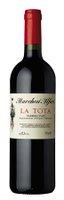
WBW #42 Just Seven Words: Marchesi Alfieri La Tota 2005


"Better than 2004's -- now I taste oak!"

San Martino, Alfieri, Italia. 13.5% <-- half a percent less alcohol than the 2004.

(Thanks to Andrew at Spittoon for this great great idea. I haven't participated in the last few events for WBW and hadn't really planned on contributing -- until I realized this could be my shortest post of all time and a little brevity always has its place . . . except in War and Peace.)

20080206

Not my favourite, but perhaps the perfect wine for you: Domaine de Ribonnet Clément Ader 2001

No substituting a Gamay for a Malbec in today's post -- although I will say I'm going to pretty much offer a bonafide endorsement as this bottle was darned close to making it into my fave top five last year.

I thought I was the owner of all remaining bottles in Montreal back in November. And I think I was until the SAQ went and restocked the warehouse with more. Now there's enough for everyone who reads this website. Which is a good thing. Plus, not only is it back on shelves, it's still appearing as the great 2001 vintage (click on the label image for vendor product info). And because it's a typical Bordeaux blend, this wine is just starting to show off its stuff.

HATING BORDEAUX

But you know, I guess I put all these things it had going for it aside. Because in the end -- after all the bottle hunting, schlepping them home and the copious note-taking -- I didn't think this was among my personal favourite wines. I'm down to two bottles of it and I'm not even planning on getting more of the new stock that's been released. Why? Maybe Eric Asimov's current discussion at The Pour on why people increasingly "hate" Bordeaux (or Cabernet-based wines that approximate Bordeaux) has something to do with it.

(For the record, to "hate" Bordeaux is to value taste over judgment, which, for so many reasons, is fine in wine criticism as long as you know you're doing it... Lyle Fass seems to be aware of this and I think Eric Asimov is too.)

Without further ado, here's what to hate:

This is a classically styled wine blending the big Bordeaux grapes -- 40% Cabernet Sauvignon, 30% Merlot and 30% Cabernet Franc -- so no dangerous change-up from blackened Cahors to light-bodied Beaujolais on tap here.

It's actually classic Bordeaux grapes in the form of a vin de pays or French country wine. The vdp region is Comté Tolosan, which lays outside the doorstep of the Gironde, nestled in the Pyrenees that approach the Midi of the South of France. The location means it can only ask for a fraction of what you'd expect to pay: $18.75, or a total of exactly $225 for a case.

So this, folks, is where your bargain wine is at.

Domaine de Ribonnet Clément Ader Vin de pays du Comté Tolosan 2001 (Note: Clément Ader is not a winemaker, but rather a French aviator to whom this cuvée is dedicated.)

Eyes: Deep purple with dulled edges.

Nose: Rich red fruits, grenadine and lots of berries, stewing, with hints of licorice and leather and maybe animal, and over time, a crystal clear impression of muddled strawberries with white pepper. Yummy.

Mouth: Decanted for about two hours to open it up, the Ribonnet Clément Ader possesses dusty tannins and a gauzy minerality. It works against the fruit at first pour but after three hours in a carafe, the earthiness begins to balance fruitiness. After longer than that black fruit and licorice start to dominate the flavour profile. A solid wine that combines both the austerity of a fine Bordeaux and the sunniness of a Midi wine.

Stomach: Wraps itself around food quite well at this point. It leans on it and perhaps needs it when first opened, a half-dozen years into its life (with at least another half dozen to go).

Christian Gerber, Beaumont, Lèze, France. 13%. Certified organic wine.

20071229

Clos du Tue-Bœuf makes my favourite wine of the year

   
Clos du Tue-Bœuf Rouge Cheverny 2006 (about $15)

In any previous year, Portuguese red blends -- frequently strong values -- would be in my list of favourites. Last year, the Casa de Santar Dão 2003 was one of my go-to everyday wines, for instance.

This year, I have found similar strong value, and a familiar rusticity, flavour profile and food-friendliness, in a Cheverny red blend, the generic cuvée from Clos du Tue-Bœuf (of France's Puzelat fame).

Cheverny is a French AOC in the Loire Valley and it is more associated with white wines than red. I would hardly expect it to suggest to me my favourite Portuguese bottles. But it did.

It's even stranger that the grapes blended together to do this are Gamay and Pinot Noir -- not exactly kin to the indigenous grapes of Portugal, or their reputation for yielding heavy and tannic wine.

This entry-level Tue-Boeuf was introduced to me by BrooklynGuy back in August. At that time, I was the first of thirteen people to comment on his report, salivating over what sounded like my ideal find -- what he titled "The Finest Value Red of the Season". Having just arrived back from a New York vacation days earlier (during which time I got to experiment with some inexpensive unfiltered Beaujolais that was Bguy-approved and meet the man himself), I commented that I could only hope to return sometime in the fall to hunt down this fetching cow-killer of a cuvée.

Months pass, and it's late November. I'm in Brooklyn. By all accounts this wine is out of stock (but I had all but entirely forgotten about it anyway). Sure enough, along comes Brooklynguy to meet me at a Seventh Avenue wineshop in Park Slope called Prospect Wines and he's carrying with him his last bottle of Tue-Boeuf and he proceeds to serve it me at BYO down the block. What a guy. That this wine turned out to be every bit as good as he had described was just the icing on the cake. This was one of the best wine experiences of recent memory -- and surely one of my favourite pours of the year too.

This wine is definitely unavailable in Brooklyn (or else I would've retrieved it), and as I mentioned, I couldn't get it in Canada. So suffice to say good luck to you tracking some down.

For the tasting notes on this one I leave you in the capable hands of Brooklynguy, who wrote about this bottle from summer into fall on CellarTracker in 2007. Here's how I cut and paste his observations together. (Thanks again Brooklynguy!)

Eyes: Light but deep, ripe and earthy (hmmm... I think this is referring to palate rather than appearance).

Nose: Lovely Pinot Noir nose of griottes, clean aromas of dark red berries and once open for about 10 minutes, vivid floral aromas -- dark violet.

Mouth: Pure, juicy, sweet and luscious, this is a bowl of black cherries on the palate, with pleasant earthiness and lip-smacking acidity. Smooth, although slightly grainy texture, and floral. Delicious. Low alcohol.

Stomach: Fantastic inexpensive Pinot/Gamay blend incredible how delicious this wine is (especially when you're eating -- we had it with hummus and fresh Middle-Eastern bread, bean stew, grilled lamb, and salad). When you think that it costs about $13 it becomes ridiculous.

20071228

Château Grinou makes my favourite wine of the year


Grinou Réserve Rouge Bergerac 2005 (about $16)

A common theme on this annual best of list is catching the 2005s before they are replaced by the 2006s. Since 2005 was such a remarkable vintage in so many places it's not surprising to see this. But most of the acclaim for the harvest of 2005 is usually not placed on wines that are this cheap, and this good-drinking this early in their lifespan.

Here we have a young wine that seems too good to be true -- with already a firm grip and a youthful embrace it seems to know no growing pains. It's outlook is positive. It promises to only improve, which is to go from great to even better.

That what's doubly incredible about the 2005 Grinou Réserve. This lusty Merlot varietal from Bergerac, a region just outside of Bordeaux, is a keeper. Winemakers Catherine and Guy Cuisset give this cuvée a full ten years of prime drinking time, so it's peak time may not yet have arrived. Buy up cases while you can.

If that sentiment sounds familiar it's because it was first uttered by Joe of Joe's Wine back in September. At that time, he gave this bargain an admirable score among heavier hitters. I'll be monitoring that score as it likely will go up when Joe revisits it in years to come. Thanks
Joe for sounding the alarm on this one.

Meanwhile, who will be the first to report back here on the 2006 Réserve? Michel Phaneuf gave it a similarly strong review in his 2008 guidebook but he leaves out any promise of future development that somehow the 2005 managed at under $16.

Eyes: The colour is a richly-hued purple.

Nose: Had a few problems with cork taint in opening about a half-dozen of these over the course of the year and the nose can be a bit funny -- is it sour cherry? -- it suggests something mineral but at first it's quite funky as well.

Mouth: Incredibly smooth on the palate, greeting you with intense, mouth-filling spicy oak and fruit of great depth. Mid-palate turns towards earthy tones and licorice. Finish is very long and lovely lengthy plummy note etched with a slight rasp of acidity that just leaves you wanting another taste. To me, this nears perfection. A well-crafted wine, with totally integrated wood. When I dissect it, it comes across like a textbook example. And it's $16! Why? Because the B is for Bergerac, not Bordeaux.

Stomach: With the rustic cuisine I tend to make, this wine is put somewhat into misuse. I had a heavy lamb pot pie full of butter and hot spice. The wine's body, which was medium, became even less present. Spicy food is not good for it. The black fruit came through less than the minerality, making it stricter than it needed to be.

20071227

Planeta makes my favourite wine of the year


La Segreta Rosso IGT Sicilia 2005 (about $16) & La Segreta Rosso IGT Sicilia 2006 (about $16)

It was late last year that I tasted this 2005 blend of Nero D'Avola, Syrah and Merlot from Sicily. It was bold and unusual, not what I typically expect from Italian wines in the price range, namely expressions of light to medium body with some tart damson plum or zingy black cherry.

There weren't much of those. Or at the very least, you could've said the Syrah packaging aligned the fruit flavours of the Nero D'Avola and the Merlot with newer world traditions: cedar, spice box, lovely roasted notes, substantial body. It was perhaps too young to drink in 2006.

Fast forward to the end of the 2007. It was November and great praise met the release of the 2006 Segreta reds. Swayed by the positive reviews, my friends and I went out to buy and taste it. Somehow we ended up with a bottle of the 2005 back in front of us. We didn't know it at the time we opened it up.

We didn't know it, except immediately I felt I couldn't be drinking wine that was less than a year old. Sure enough, this was the older vintage. Although bright and charming, there was a mellowness and fine integration to it. I wasn't taking notes at the time, but it didn't matter. It was one of those tasting moments where all the elements come rushing together perfectly -- jotting down individual components of the wine as they come to you doesn't apply when a wine is this whole, with this much integrity.

Many critics underline how tones of mocha and raspberries envelope one another within the beautifully tannic arc of the 2005. I'd go along with that. But it'd be a cop-out not to provide my own notes on a wine I'm proclaiming a wine of the year. Problem is that there is no more 2005 left where I am and all I can do is retell the story of not paying enough attention to wine labels and the happy mistake it created.

A TWO-IN-ONE ENTRY IN MY FAVE TOP FIVE

So this post for one of my five favourite wines of the year is actually for two different wines. The Planeta Segreta Rosso 2005 -- the wine that moved me -- and the the Segreta Rosso 2006 -- my great "red" hope for drinking in the new year. (Click on the first "drink now" bottle image above for 2005 availability in Ontario -- click on the second "lay down" bottle image for 2006, which is what the SAQ is currently stocking across Quebec.)

So meet the 2006 red Segreta... It's not the same wine as the 2005 by any means -- it adds Cabernet Franc into the mix -- but if anything, its critical acclaim has only grown from last year's reaction. For more technical details and press, see the Planeta website, which is making me want to visit all corners of Sicily with every mouse click. With any luck, in about ten months' time the 2006 will integrate as amazingly as the 2005 has done (isn't it interesting that the release date for the 2005 Segreta was only in August -- about a year later than its release in Quebec and perhaps much more timely). Without a doubt, I know I can look forward to 2007's edition to be bottled and shipped out soon from this island off the tip of the Italian boot.

(While I admitted to not having notes for the 2005 other than a fallible memory, my notes for the 2006 are very much hot off the press, and I might add, rather hastily arranged from a BYOW dinner at a small, noisy, and dimly-lit resto, just moments ago.)

Eyes: Brickish red, but with intense hues and quite opaque.

Nose: Earth, thyme, hints of cooked fruit? Developing...

Mouth: Savoury attack, with stewed vegetables and ripe tomato, grippy but with a silky texture and somewhat woody.

Stomach: Garden fare done Italian-style, hearty pasta with sausages, bold herbs, anything oven-roasted.

20071126

Anytime wine: O'Terra (formerly Opus Terra) Les Vignerons des Tourelles Merlot Syrah 2005


O'Terra is short for Opus Terra, but you can't really say that since some Californian heavyweights in the wine world have taken over official ownership of the word Opus since the mid-eighties.

When the Vignerons des Tourelles in Languedoc-Rousillon created this cuvée in the nineties, its label (which happens to be the one on the bottle shown above) was considered as infringing on the copyright of the winery, which is Opus One. As an outcome of the legal dustup, Tourelles had to settle for naming their wine O'Terra.

In Quebec, there is no Opus One wine currently for sale. When there was, it was priced at $264. The "opus" of a cuvée that the Vignerons des Tourelles make is $251 cheaper. No wonder Opus One was worried!

I've never tasted any wine carrying the Opus One brand -- I'm sure it'd be hard to compare it to O'Terra Vin de Pays d'Oc 2005, but I think it goes without saying that this bottle here is the anytime wine that Opus One is not.

Anytime wine is a great thing. It's the wine I described in the last post. Only the most difficult-to-pair dish would not be done justice by this savoury, oak-free, fruit-driven red wine. It's not meant to age however, so when I say it's anytime wine I mean anytime this year or next.

O'Terra is 60% Merlot and 40% Syrah. This balance is perfect. It renders tannic values to an exceptably low level for lighter fish dishes; it adds complexity to a flavour profile that is expressive enough to come across whether it served with steak or duck.

What else can I say? I most often think of opening a Loire red for my favourite dinners. But the times in between special dining occasions are more than well-served by this fantastic $13 bottle.

Eyes: A clear red with medium depth.

Nose: Fairly aromatic. It suggested cherry pie to me. Some yeasty notes with alluring red berry aromas.

Mouth: Crisp and refreshing attack with plums in a savoury spice. Tremendous brightness with a dry and light-to-medium body. Intense flavours supported by some round tannin. The finish is somewhat weaker than the attack. Simple but so expressive.

Stomach: A food-friendly package has been delivered to you. I had this with tuna casserole one night, red meat the next. Pork, poultry, salmon, why not? Lamb might not be the perfect match, but it would work.

You also might take Michel Phaneuf's word on this wine since it's been given high praise for a number of consecutive years, even in the troublesome 2002 vintage.

I particularly appreciate Malcolm Anderson's review despite being for a vintage that has long passed. I last tasted this version four to five years ago, yet it still sounds pleasantly familiar:

I really liked this wine’s blend of merlot and syrah. It had a leathery, animal, earthy nose and delightful blackberry fruit on the palate with a complexity rarely seen in a wine of this price. The wine has no oak aging - you taste what the grapes and the winemaker gave you. the wine has enough tannins to add interest to the palate but they are the softer grape tannins imparted by the skin and are easy to handle. If you are lucky enough to have any remaining turkey leftovers at this date, defrost them for this excellent wine. Wine of the week ****

Malcom Anderson - The Gazette - Jan. 11, 2003

Beaucaire, Gard, France. 14%.

20071121

New rock's "Hot Earth": Domaine des Roches Neuves Terres Chaudes 2005


I'm not sure why I went out to try and buy the entire Thierry Germain catalogue. Actually I do know why.

After admiring Joe's donation to our Cabernet Franc tasting -- La Marginale -- I realized that BrooklynGuy recommends other cuvées from Thierry Germain. Germain, the wine maker at Domaine des Roches Neuves, also produces L'Insolite, Terres Chaudes (the clickable bottle image shown above), as well as a self-titled domaine cuvée, their entry-level wine. I couldn't find L'Insolite, but managed to bag the other two.

I liked the Terres Chaudes 2005 quite a bit. (I preferred it to the cheaper Cuvée Thierry Germain 2004 -- coincidentally if you swap vintages you can get BrooklynGuy's take on these two, as he tasted the Terres Chaudes 04 and Cuvée Thierry Germain 05.)

Domaine des Roches Neuves Terres Chaudes 2005

Eyes: Dark purple hue with a fuschia rim. Exhibits tears and a lot of viscosity in the glass. Inky depth of colour. NOTE: Sediment is in this wine -- quite a bit -- so it needs a thorough decant.

Nose: Low intensity nose. I thought this would develop more but even on the next night is was subdued. Some licorice and, I think, alcohol.

Mouth: Sour cherry evolving to darker red berries. A rootiness suggestive of star anise takes over to make this Cabernet Franc an interesting specimen that is neither distinctly fruity nor vegetal. Some green pepper and mineral with a lovely creamy note. Drying, crispy and with a solid body and sound tannin. A fine finish with great length. Style very much similar to the 2003 La Marginale, yet I'd encourage people to treat it much more like a "drink now" wine despite the fact that it's in its youthful stage. It's good like this!

Stomach: I've read that you should grill food with this wine but my braised rôti de boeuf (a bas palette or bottom blade roast slow cooked with turnip or carrots and garlic was totally delicious as an accompaniment. Saumur-Champigny earns its title as the food-friendliest appellation of France so you could serve it with almost anything. Since this wine is more substantial fare than most bistro bottles, I would advise you try something richly textured, slightly fatty, somewhat rustic and intensely flavoured. Rôti de bas palette garni, it is!

BAS PALETTE ON PARADE


Varrains, France. 13%.

20071114

WBW #39 Silver Burgundy: Domaine François Lumpp Crausot 2004


Today it's BrooklynGuy's turn to host Wine Blogging Wednesday. With it comes a theme that brings bloggers a piece of him.

What makes BrooklynGuy tick may be a question you've asked yourself if you've ever followed the ongoing and always intriguing blogging going on at BrooklynGuy's Wine and Food Blog.

It's fairly obvious to the casual reader that BG is big fan of Burgundies. But when I met him he told me that these were the wines that turned him a true wine lover beyond the point of return. He admitted that these were expensive wines. With a newly arrived BrooklynBaby on the scene (and those BrooklynRents aren't going down either you know), BrooklynGuy's need to find greater value wines from storied French wine regions grew more urgent.

Hence WBW 33, hosted by me, which... whoops, wrong WBW! But like the WBW 33 Languedoc-Roussillon value wines I did in May, BrooklynGuy has asked participants to look to other wines -- the lesser knowns and the humbler reputations (in this case, Burgundy's Côte Chalonnaise and Mâconnais) -- to find some quality bottles at a more affordable, everyday price. Hear hear!

Hence Silver Burgundy. There's no need to always try to go for the gold. In the world of wine, I couldn't agree with this sentiment more.

I have a feeling the bottle I picked up for WBW 39 is too expensive, despite all this. I knew I wanted a red, and since I already had experienced a couple of great Mercureys (both the Michel Juillot and the Marquis de Jouennes would've been perfect entries for WBW 39), it was the Givry region I was perusing. In the end, they were very alluring to me and perhaps I put more weight on the appellation part than the getting a bargain part.

I picked up the Domaine François Lumpp Givry Premier Cru Crausot 2004 -- the Crausot in the name being the precise plot of land in Givry that Monsieur Lumpp uses. This bottle is priced in the mid-thirties in Quebec (see its online descriptive record here). That's because it's not only just any old Givry -- Givry being situated in the heart of the Chalonnaise region -- but because it's also a Givry Premier Cru -- my first Burgundy cru, or classed growth. So apparently that Crausot vineyard is hot stuff. Not sure if crus are what Silver Burgundy is all about, but went for it anyway.

I was very interested in seeing how this would pan out. So, of course, I would be disappointed. I think maybe I should've taken baby steps. BrooklynGuy seemed to want to ease fellow bloggers into this one and I may have dived in head first. Here's what I found.

Eyes: Flashy, intensely coloured and bright ruby in the glass.

Nose: In terms of aroma, I thought it smelled like barn on fire that contained a whole lot of freshly picked mushrooms and was subsequently doused with vats of cherry kirsh. Over time, this sense seems to wane. Maybe I got used it? Not sure. But I see that Jane MacQuitty endorsed this wine -- perhaps because it so vanilla-ish overall.

Mouth: This is a very overt wine. Also very smoky with strong cherry verging on cherry medicine by virtue of the heavy extraction. There's also some interesting earthiness and pinch of cacao, but mostly it reminds me of concentrated jello. A squelch of acid is followed by a much simpler finish than I was hoping for a wine of this calibre.

Stomach: Fairly demanding with food, I have to say. I had to re-season my meal, midstream. The chicken breast encrusted in Gran Padano and mustard-celery seeds was a lively match that stood up to this hulking Pinot. It brought out the spice and verve that lies at this Givry cru's centre. However, my simply prepared mushrooms did nothing for the wine and I really had to enhance them to continue. More flavourful were roasted red and yellow peppers. They had an intensity that paired fairly well because its strong ovenroasted notes complemented the wine's.

A LUMPPY RIDE SMOOTHES OUT OVER TIME

On the second night, this Lumpp cuvée was showing off a fruity licorice profile that I quite enjoyed and by this time the length seems quite spectacular to me but I still would not buy it again -- even if a thorough decant could get me to this point again.

My conclusions on this wine don't beat around the bush. This is a heavily extracted wine that possesses little intrigue and too much oak. Not a lot of complexity or anything that really flags my interest. This is exactly what I'd call a boring though technically sound wine. Other than the nose I'm fairly sure all aspects of this wine could be found in a Mondavi wine of half its price. In a word: Lumpp-ish.

Grade: 2 Lumpps (out of five)

Like it or lumpp it, this was a great chance to discover a region I don't usually explore and also to find out a little more about one of the palates I most respect in the blogosphere: that of the BrooklynGuy. I eagerly await the remaining entries and of course the full WBW 39 roundup. I'm staying tuned!

François Lumpp, Le Pied du Clos, Givry, France. 13%.

20071112

My dinner with Conte Brandolini d'Adda Vistorta 2004


This is a wine that figures more prominently in the mind than it does in the cellar -- I think about it more than I drink it. And I refer to it more than I review it.

In fact, this is the first real tasting note I've done for this cuvée, and only the third bottle of it that I've ever opened. So reverence coloured my note-taking, which in my books means harsher judgment and tougher evaluation rather than the reverse.

But that always happens when your first experience with a certain wine lights up your circuits. That was the 2000 Vistorta, which I mentioned in this site's first review of a New World varietal (I also alluded to it in a comparison of mass-produced Merlots and again recently during Wine Label Week #1). The way I see it, that 2000 vintage far outshone the 1999, and laid the groundwork to earning the 2003 a coveted five-star review from Michel Phaneuf (his latest release Le Guide du Vin 2008 should be out this week -- will it honour the 2004 in similar fashion?).

A NOTE ON THE SOIL TYPE

I love trying to trump Phaneuf, but before I attempt to predict his evaluation of the current Visorta vintage in stores, here is a note on the type -- soil type.

The Grave in the large Italian appellation of Grave del Friuli, northeast of Venice, might conjure up Bordeaux by way of Graves, if not Pomerol. This is appropriate as both the Italian and the French Grave designations come from the same root word which signifies the gravel that generously blankets both regions. But here's where the suggestive name that makes up a wine's designation can fool you.

Vistorta's vines do not sprout up from gravelly soil. Further afield from the central lowlands of Friuli, which have plenty of gravel, Vistorta's estates in Sacile border on Piave and feature soil types that are limestone and clay.

Winemakers says that this, not gravel, is "an ideal base ... with the same characteristics found in the Bordeaux and Médoc wine-producing areas, where the clay soils and hot and dry summers favour Merlot allowing it to express itself at its best."

Hmmm... That's a bait-and-switch, isn't it? Storied Bordeaux Merlot is more right bank than left, and Merlot ripens early so how is a long hot summer going to help? It seems to me the Vistorta people don't have the Grave-Graves connection that would align them more closely with Pomerol and they are trying to sidestep their way to Claret. I am being too cynical?

MY NOTES ON THE CURRENT VINTAGE

This wine does not need convincing -- I guess that is ultimately what I am trying to get at. But many Friuli wines still carry a reputation for a thin bitter body, so I suppose Vistorta is one winery that wants to throw down its claim to convince the first-time buyer before the corks pop, at which point the convincing really begins.

I'm not a first-time buyer, but here's what happened when my most recent Vistorta cork popped...

Conte Brandolini d'Adda Vistorta Grave del Friuli Merlot 2004

Eyes: Medium ruby in colour, exhibiting clarity and little tinge around the rim.

Nose: No shortage of aromatics, yet it still suggests itself as a developing wine. Candied rinds, spices and a sweetish component. Youthfulness on the nose wears off with some time and soon in my glass I'm getting cotton candy, pomegranate, honeycomb and some very well-integrated vanilla.

Mouth: Not a lot of surprises here after spending so much time nosing this wine. It's typical of a Merlot varietal -- damson plum and flowers. (Though the flowers convey some greenness, I still think they are violets.) Quite dry and sporting a lively acidity, this is still on the incline with no doubt several years in it once it peaks. Right now, the tannins are thoroughly drying and there's only a moderate flavour intensity with a medium-to-full body. It's not reaching the heights of the 2000, or at least not yet anyway. Clearly, this is a great expression and a superb wine nonetheless.

Stomach: Some tasting notes -- usually the concluding ones -- aren't rendered until I actively decide what dinner will complement the wine I've got. I find often it's the food you're eating that will help you nail down the essence of a bottle. In this context, food is not only pleasurable, it's quite instructive too. So for the remaining wine I saved for the next night, I made a rich, heavily caramelly meal. This was drawn up as a match for the blackened fruit and caramel tones the Vistorta possesses -- that's my overall sense of the wine that I didn't even note. I prepared carbonized carrots with caramelized onions, broccoli roasted in the oven until the florets started to singe, and my old standby of Parmesan-breaded chicken breast fried in brown (burnt) butter.

Azienda Agricola Vistorta, Brandino Brandolini d'Adda, Friuli (DOC) Grave, Italia. 13%.

20071105

Cab Franc table talk: Château Gaillard Vieilles Vignes 2000, Charles Joguet Clos du Chêne Vert 2002, Thierry Germain La Marginale 2003, Steltzner 2004


It was a huge pleasure to partake is this substantial (and revealing) tasting of some fine Cabernet Franc wines.

By teaming up with fellow blogger Joe, I was able to stage a worthwhile look at this varietal in two New World and three Old World examples: from Napa Valley's Stags Leap District, from Niagara Peninsula's Glenlake Vineyard and three from Loire appellations, including Thierry Germain's Domaine des Roches Neuves cuvée La Marginale, which sadly is no longer available for sale in Quebec.

Thanks to Joe for extracting that bottle from his cellar. He also brought the Napa Cab produced by Steltzner Vineyards. I provided the Chinon and Niagara wines, plus a unique Loire red blend from Vincent Girault at Château Gaillard in Mesland, just to get our tasting hats on. Here's how I saw it all go down.

Château Gaillard Vieilles Vignes Touraine-Mesland 2000

This wine was not tasted blind. It was, as I mentioned, our warm-up wine. From the 2000 vintage, this has got to be the cheapest oldest wine you can buy at the SAQ. Adding to the intrigue was a percentage Gamay that the winemaker claimed to blend into this seven-year-old version of Cabernet Franc. How would this taste? A lot like Malbec actually, and that's of course because Côt was the third blending grape involved, perhaps the primary one. The Gamay provided a squelch of fruity tartness, the Cabernet seemed to add some rich cocoa notes. But it mostly seemed to be an expression most characteristic of Malbec or Gamay than Cabernet. (Several nights later this wine is still hanging on nicely with some zip). For $19, this bottle from 2000 is a rather odd delivery of an otherwise friendly and fun quaffer.

Château Gaillard: Certified organic and biodynamic. Vincent Girault, Mesland, Loir et Cher, France. 12%.

Charles Joguet Clos du Chêne Vert Chinon 2002

To me this was tell-tale Chinon, and the easiest to separate from the rest of the wines. It was decanted and definitely needs it. Even after a half-hour, it was still settling in. On the nose I first got cassis and cream. It seemed one-note on the palate, but that was still changing in the glass. On the palate it became less strict, offering luscious notes of tomato and green pepper. It is a typically vegetal wine with strong earthy/mineral elements so it's not surprising it goes so well with food. When I served beef tenderloin, seasoned potatoes wedges and garlic-steamed broccoli (which, perhaps unfortunately, only occurred after the wines were revealed), this Cabernet really showed its stuff. It ushered in the meal like none of the others, a perfect partner for steak and frites or for simmered beef and fresh vegetables. (I think that only food with really spicy or sweet elements would prevent this wine from shining as bright -- this wine definitely has a style shared with the ultimate dining wines.)

Clos du Chêne Vert: Charles Joguet, Sazilly, France. 12.5%.

Thierry Germain Domaine des Roches Neuves La Marginale Saumur Champigny 2003

This was the first wine we decanted and the first wine I tasted blind. By the time I stopped taking notes it was still baffling me, especially as to its true potential. This wine was so solid with so much depth that I felt the best reading on what this wine really amounts to could only come years down the road. It had a sharp nose rendering a complex bouquet. On the palate it was equally complex and powerful. The finish delivers admirably huge tannins -- definitely an aspect worth revisiting in the future. If it was a bit tight in the early stages, a palpable acidity was shown so I see no reason why it wouldn't last a decade or more. The fruit reminded me of Saumur fruit and terroir, though with many times the body and many times the lift. Ultimately, this convinced me that it was the other French wine, though clearly more New World-ish than the Chinon. A revelation -- but it manhandled my meal a bit. If only I could save my dinner and then reheat it with this wine ten years from now.

La Marginale: Thierry Germain, Varrains, France. 13%.

Steltzner Vineyards Stags Leap District Napa Valley 2004

Here is where I lost my way. The nose of this wine presented grenadine and spices and a somewhat understated aroma of leather. This was soft and alluring and was channeling the French wines I drink almost every night. On the palate, it was sweetish and offered less intrigue than the nose. It was more heavily oaked and yet much lighter than the Marginale -- which is a far from ideal combination. Especially with food, it ends up generating vanilla and so it comes off cloying. You might sense that it has peaked and is already receding. So my guess was that this was the 2000 Niagara wine rather than the Napa three-year-old. I was wrong. Surprise! I really could not tell at all that this was an over-alcoholized American wine of 15%. Credit to Steltzner, though as the night went on and I revisited it after dessert the alcohol was suddenly unmasked. The Napa zap! But too late -- I was fooled. To me this was the most demure and attractive nose of the bunch but it took me spiraling downhill from there. If I had it again, I wouldn't decant.

Steltzner: Napa, California, U.S.A. 15%.

Hillebrand Estates Glenlake Vineyards Showcase Niagara Peninsula 2000

Alcoholized and highly evolved in the glass, despite not decanting this bottle. This wine is oxidized and was rebottled for return.

This post mirrors what Joe already published over on Joe's Wine. But unlike Joe, I am not including my notes for the Niagara bottle (and I instead mentioned the Gaillard, even though it was not tasted blind). I'm taking the Niagara wine back. This is my decision. Joe wrote me that he "didn't find it to be something that needs returning," but he understood my feelings. The fact is I had tasted the Niagara wine earlier this year and wrote glowing notes on it here. But it showed up at our tasting showing seriously aged fruit and oxidation and this was merely a matter of weeks after purchase from the winery. How disappointing.

MY LESSONS LEARNED

But I think my real disappointment was that during our tasting's blind phase, I didn't guess correctly. I observed yet I let a favourable memory of the Niagara bottle and a distaste of American wine dictate my guesses. This was because I mistook the strength of oxidizing elements on the nose for the presence of high levels of alcohol. I was shocked to see this actually revealed as Niagara. It made prefect sense to the neutral bystander, and in hindsight. This wine was much older, and had my observations been interpreted correctly, I was there. But I was swayed despite -- perhaps paradoxically because of -- the fact that we were doing them blind.

Lesson 1: Blind tastings are best performed on bottles that you have not tasted before or you'll be tempted to outsmart your own blind observations with memory and personal response, which is quite disappointing because it defeats the whole purpose.

Or rather, in blind testings, it's best to forget the past. I think my tasting partner Joe had a firm handle on this aspect. He had tasted the Steltzner before. Experience is knowledge but it's synthesized knowledge -- be advised to leave out individual bottles experiences!

"No need to be disappointed," said Joe in the postmortem. "It shows that the blind worked, and you correctly separated the old world from the new." [It's true I did ID this and the other French wines correctly].

"The Canuck wine was a bit tired -- Cab Franc, probably from younger vines than all of the others, is not going to keep forever... note that the bottle to bottle variability probably increases over time. Your previous experience was eight months ago at the end of a wine's life -- perhaps not that much of a surprise they were quite different?" surmised Joe.

OTHER LESSON LEARNED

Lesson 2: Is it hard to keep track of wine consumption at a blind tasting while it is happening! I don't think I'll ever figure out a way to better keep track when there's so much set before me. Perhaps proper tasting glasses would help?

Lesson 3: Blind tastings with "table talk" can sway evaluation as much as "drinking the label" does in non-blind tastings. Joe and I had some table talk, but not much. We didn't discuss conclusions until the end. And besides, what little table talk there was had almost no effect since the wines were positioned blind as well as tasted blind. This prevented a shared order of wines between to the two of us so table talk comments could not be attributed to a particular wine and therefore sway tasting opinions.

Lesson 4: I did not assess colour in the tasting because I thought it would too easily reveal the wine, given the broad four-year gap in cuvée vintages. The lighting was also poor so I let Joe turn up the house lights while I put the final touches on dinner (see Joe's notes for proper scoring). But the fact is that the wines' colour didn't reveal much at all, no matter how hard I tried to read them.

20071012

SNAKSHOT: Filet of fish and Quinta de Cabriz Reserva 2003 meet for dinner


This was a fantastic meal prepared by my sister and her boyfriend on April 2, 2007, already a half-year ago but still strongly etched in my mind.

It wasn't Easter dinner but it was a very sophisticated dinner, yet stunningly simple in execution. Lucky me -- I got to watch, and point my camera.

When I arrived for dinner, the strong smell of soy sauce met my nose. In the kitchen, fish fillets were marinating in a baking dish. The aroma was pungent and I got the idea of offering a pairing by way of one the Portuguese wines I brought with me.

The final dinner preparations were made as I nibbled and shared a Cheverny aperatif that I knew would be just my sister's style of wine and it was. I was more apprehensive when it came to selling a sturdy Portuguese Reserva with such a very white fish. But in the end, my Quinta de Cabriz Reserva Dão 2003 made perfect sense since the Portuguese diet is replete with heavily flavoured fish dishes, be they charred, smoked, grilled or broiled.

Our fish went into the salamander under the oven and was cooked to perfection. You can see this in the photo above, and how the tasty marinade worked its way into the fish flesh, generating a big flavour punch to the palate. A punch that my wine could stand up to and flatter as an accompaniment. And yes, even a blood orange garnish wasn't enough to throw off this wine, though you wouldn't except much from pairing a red with some citrus. Yet the signature profile of spice and orange confit in many good Portuguese wines permits this match too.

There was a gasoline-y note in this wine that some might call tarry or mineral. It coats the tongue in a certain way. You know it was you taste it. The assertive treatment for the fish penetrated this effect of the wine and then proceeded to dazzle the tongue with its own "umami" seasoning -- something I don't think my more restrained and elegant wine from WBW 38 would have allowed the food do as well because it is so much softer.

The Cabriz Reserva, which is composed of Alfrocheiro, Touriga Nacional and Tinta Roriz indigenous grape varieties also offered strong berry fruit with palpable acidity to cozy up to the creamy pasta side and make some nice contrasts. But all I can really say is that we lucked out, because this was not only the first time I uncorked this bottle, but the first time I had ever seen it. I bought it at the LCBO moments before I walked through their door.

I love Portuguese wine.

Thanks to those who inspired this post: Ryan and Gabrielle of Catavino who hosted WBW 38 on such a great and ripe topic; Sonadora whose compliments on my dinner photos got me to go over a long-neglected food photo album; BrooklynGuy whose interest in deciphering these red blends put me into a pairing-analysis mood; and finally to Kristen and to John for their totally memorable dinner. It was a treat! Cheers.

20071010

WBW #38 Portuguese table wines: Quinta dos Roques Reserva 2003


Note on the terminology of WBW 38. "Table wine," in its broadest and most international sense, is wine of average alcoholic strength rather than those strengthened by the addition of alcohol, like fortified wines. But throughout most of the EU, "table wine" is a category of wine that has no official classification. For these wines, a vintage and a designation (like the Dão D.O.C. designation from Portugal that we see below) are not included in the labeling information. Furthermore, in Portugal, "table wine" might be construed as an "IPR" or Indicação de Proveniencia Regulamentada, which is a designation secondary to the top-tier D.O.C. system. WBW 38 is clearly focused on Portuguese wine other than Port wine or, in other words, those specified by the international definition of table wines -- simply the wines you'd find at the dinner table, and in that sense it is "table wine." Nevertheless, on these web pages, table wine is regularly used to indicate the EU/French definition. On these pages, WBW 38 wines would not be referred to instead as "table wine," and SAQ.com suggests that they be called "meal wine" which is a suitable name because Portuguese wines are fantastic for pairing with food.


Big ups to Ryan and Gabriella at Catavino for organizing a Portuguese WBW. It definitely seems about time. These two bloggers are doing some serious justice to these wine regions by hosting a ton of great resources on their site and by inspiring winos everywhere to get out and taste the indigenous grapes of Portugal. Their web pages are very much worth checking out. They allowed me to get my hands on a definitive list of Denominations of Origin or Denominações de Origem -- the 25 wine designations that Portuguese wine carry as a seal of quality.

I didn't realize that there were that many D.O.C. designations in Portugal. While I am no stranger to wines that reach beyond the Douro -- the Ribatejo, the Alentejo, the Estremadura, Vinho Verde, Palmela and Dão -- it now appears obvious to me that the first country I would visit for its wine regions would be Portugal, hands down. I look forward to reading more WBW 38 entries on these wines of Portugal, that at their best are both tenacious and lovely.

My entry to this month's theme is a bottle I've been meaning to try for a long time. I wrote a bit about why I've been wanting to taste it here. See the notes below for what it actually tasted like. Overall I was surprised, no doubt because I don't recall ever opening a Portuguese wine at this pricepoint. ($30 is definitely what I would call the upper register of the range of my value wines, though a wine bargain can surely come with any price tag attached to it -- it just depends on what's inside.)

Quinta do Roques Reserva Dão 2003

Eyes: This looks like one of those unwieldy and heavy glass bottles -- yup, it is. I keep staring the bottle down but still note that the wine is not as darkly pigmented as I would expect. Somewhat mellowed red hues and no bright purplish tinge I was expecting. A silky smooth consistency.

Nose: Yum... This is typical. A spice box with notes of cooked bell pepper. When Portuguese wines carry Loire Cab Franc aromas, I know I'm in for something good. Some diesel comes through too. Over time, the nose on this wine gets warmer, more embracing yet complex. Subtle and not at all intense. This is some absolutely elegant nose perfume.

Mouth: Zesty orange rind and fruit compote flavours up front. Some characteristic attributes are present -- chocolate, cinnamon and gasoline -- and arranged in elegant proportions. Animal too? This is Portuguese elegance. Softly moves through to a nice middle and a lovely finish. Luscious medium body is unique and interesting, but somehow makes the length seem shorter. Acidity is a little less than lively, but present, which offers this wine a tremendous arc built around a reliable (but thoroughly integrated) tannic grip.

Stomach: Don't deny the stomach -- this is table wine or meal wine or whatever you want to call it, so bring on the bouffe. All of my tasting notes came alongside a simple dinner, pictured in this post. Without food, this wine was coming off unnecessarily vegetal and cold, strangely lacking intensity. Food makes it less austere and adds an attractive element of synergy.

With food of all types -- salty, savoury, bitter and sweet -- Quinta do Roques Reserva Dão 2003 makes your dining experience so much more than the sum of its parts. Try it with the sweetness of Grelot potatoes sliced and then boiled in chicken stock, served with a sprinkling of pickled olives and the saltiness they provide. Or have it with the mild flavours of pork cutlets broiled with thyme and lavender served on a savoury bed of caramelized onion with rosemary. Even the pungent and slightly bitter arugula salad tossed with dry-cooked mushrooms for added richness is heightened by a red wine like this.

Mangualde, Portugal. 13.5%.

20071004

Moving beyond the label: Domaine Renucci Calvi 2005

And what it means to buy the wine enthusiast a good wine gift

renuci red wine corse-calvi sciaccarellu
When this site's Wine Label Week 1 ended last week, I had to go into overdrive at work. I neglected to post anything, but of course that would change when today my boss gifted me a bottle of wine -- Greek and white and made of grapes that I had never tried or even heard of before.

It's not obvious that a wineblogger would find it nice to be gifted wine at work.

Work is not a place I associate with wine or with winos. In my current office the closest I came to having a real wine conversion was several weeks ago with my boss who, reading about my interest in wine on the pages the Montreal Gazette, said: "I just like the wines that have those pretty crests embossed into the glass."

Luckily, my wine gift was not one with an insignia melded into the glass between the shoulders and the neck of the bottle.

Not that there is anything wrong with that. I do like plenty of those Loire and Rhône examples that my boss was referring to, but for different reasons. Regardless, it's very clear that the association between wine and its worthiness in your mind might not extend to the person you're buying for. This becomes the crucial idea in any exemplary act of gift-giving. You buy for the recipient, not for yourself. So, strange as it seems, wine has actually become the hardest of gifts for me to give.

Today's gift had none of that wine-bestowing awkwardness. And that's because I suspect my boss turned to one wino for advice on what to give to another. That's smart. I don't think any wine enthusiast wouldn't be thrilled to receive an inexpensive "discovery" bottle that's hard-to-find, unique, and from a new region and producer, which describes the Greek wine I received.

Since I haven't yet had the chance to look into my Greek bottle, I'm presenting to you here an equally unique wine that's from Corsica, which is a burgeoning wine region -- but still hard-to-find in your wine shop -- and an inexpensive way to discover new grapes (Sciaccarello!) and new producers. This is the Domaine Renucci Corse Calvi 2005 (click on the bottle shown at top for product details).

Oh, and just check out how that glass bottle upstages the wine label...

koriska brothers moorish wine
Indeed! In honour of today's gift-giver, this Domaine Renucci red wine comes with some nifty relief: an embossed band encircling the bottle and featuring the emblem of Corsica (the profile of a Moor's head, pictured above). And, what's more, turn around the bottle to find a rendering of the island of Corsica, which is just off the south of France in the Mediterranean Sea (look for the outlined island at the centre of the below photograph, which, since the wine was so inviting, I was able to shoot from the front of the emptying bottle... Dear Corsicans: sorry my reproduction ends up inverting the image of your homeland).

shape of the island of corsicaEyes: A nice bright red colour with fuschia hues.

NB: This unfiltered wine is pas collé ou filtré but you notice that more in the mouth than to the eye. Mine didn't throw a lot of sediment.

Nose: Aroma is promising, not quite feisty but suggesting both fruit and mineral, spices and leather. A bit like an effervescent cream soda.

Mouth: Tantalizes the palate with freshness and some very nice tannins in a medium-bodied wine with a strong finish. This is by all means a lively wine, brambly and fun with a lot of mouthfeel. The flavour profile at first seems quite deep -- earthy tones coalescing into a root beer notes, black cherry with cream, hitting some fleeting high notes of caramelization, then it goes typical of the regional grape varieties of Corsica and delivers grenadine. Actually with the Renucci it's practically grenadine syrup. It's extracted, but expressive and still young. It may lack in acidity, and its candy flavours, though surely developing, are not too complex at this stage, and could become cloying as a result... I can't wait to try this wine when I reopen the leftovers.

Stomach: Since it's a 2005 wine and I guess that the caramel notes that are hinted at could blossom with time, you might want to eventually serve this with something exotic like a Cornish hen with a flavourful herb stuffing that highlights cumin or other earthy spices. It is current state, I'd play it lighter: have it with roast chicken in a mild peppercorn sauce, couscous and some root vegetables.

Berard Renucci, Feliceto, Corse, France. 13.5%.

Next post: A proper wrap-up of WLW 1