Facebook!

Twitter

Tumblr


Showing posts with label COTEAUX DU LANGUEDOC. Show all posts

20070210

Hot French Valentine: Château de Lancyre Pic Saint Loup Grande Cuvée 2001
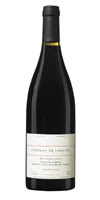
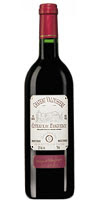
Château de Lancyre Coteaux du Languedoc Pick Saint Loup la Grande Cuvée 2001
Thanksgiving and Pinot Noir. Oktoberfest and beer. Rosés and the picnics of holiday long weekends. Sometimes observances on the calendar call out for certain well-suited wines. But I tend to think that Valentine's Day is neither particular nor demanding enough to tap for service any specific wine.

And yet, I look down at my tasting note today and I find something virtually made-to-order for Valentine's Day. So here comes a special recommendation, and I'll tell you why in a moment. For now, keep in mind that February 14 is only three days away. If you really want the bottle pictured above (click on it for SAQ details) you may not have the easiest time locating it. You may need to act now for a timely Wednesday evening uncorking.

The wine is Château de Lancyre Coteaux du Languedoc Pic Saint Loup Grande Cuvée 2001. I bought it a couple of months ago because of its provenance. Mid-range Languedocs from the 2001 vintage are great. I've found in the past these wines pay big dividends. Plus I got it because it is a Languedoc cru -- somewhat of a rarity -- and I was interested in seeing what my favourite type of red wine would taste like when produced from a vineyard demarcated as "superior."

(I also bought it because it's well-reviewed and because it was getting increasingly difficult to buy since stores here in Quebec seem to find it increasingly difficult to keep on display shelves. If this particular Pic Saint Loup cru was so spectacular, I wanted to make sure of it before going out and buying multiple bottles of any remaining stock.)

In the end I'm not sure I would buy more of this -- it's not quite my style -- though I would call it a stand-out. And it stands out especially as a Feb 14 wine. Why?

First it is hot. Hot and French! Like a maid's uniform on Valentine's Day. Seriously, this wine is a tad cooked for my liking at 14.8% alcohol. It has gotten so hot in fact that the percentage by volume on the bottle label had to be blackened out and then reprinted just above the original figure. This means that the high alcohol content on the label draws as much attention to itself as the alcoholic sensation on your palate. But if anything, it's hot enough so as to demand that it not be consumed all alone . . .

And, of course, this wine is French, as in:

Domaine familial de tradition viticole, le Château Lancyre cultive ses vignes sur un terroir exceptionnel entre mer Méditerranée et garrigue, celui du Pic Saint-Loup.

La conduite du vignoble et le climat typique de cette appellation permettent d'obtenir des raisins (Syrah, Grenache, Mourvèdre) qui, cueillis à maturité optimum, rendements maîtrisés et après un élevage de 12 mois en futs de chêne, donnent naissance a cette grande cuvée du Château de Lancyre.

Ce vin peut avoir du dépôt.
This French on the label is even more sexy if I leave out an English translation. Use you imagination!

Finally, in addition to its hotness and Frenchness, this wine is actually a real "Valentine" -- a wine produced by a vignernon who's real name is Valentin. True! (Monsieur Valentin works with Monsieur Durand as a winemaking partner.)

The Languedoc red that they have made features extracted fruit and dark subsuming berries. It is slightly spicy with great richness and depth and there's a nice tannic touch to it too. But I did sense that this wine has a tad too much heat, which mars the kind of delicate acid balance I look for.

If a certain equilibrium is nearly lost, virtually everything else is stellar here. Not everyone will find this cuvée teeters much as I did. This is fine Midi winemaking, and though I think it could've been truly great, I know a lot of people are going to really enjoy this bottle. And not just on Valentine's.

Valflaunes, France. 14.8%.

20070123

Timed out: Château Valoussière 2001

Château Valoussière famille jeanjean coteaux du languedoc
In a commitment to balance and honesty, which are two great aspects of fine wine I might add, this post picks up where yesterday's left off. Namely, at the assumption that vintage can tell you more about how a specific sort of classified wine will evolve than the wine's vineyard. Although a valid statement, it could be more balanced and honest. Here goes...

I came up with yesterday's conclusions after taking notes on a 2002 Chinon and a 2002 Chablis, each one produced from a less-than-prestigious (strictly generic) terroirs within their respective appellations.

Drawing these conclusions made me think of my old friend Fred (from France) who smartly announced that he preferred a grand cru as he contemplated the wine list of Villejuif pizzeria in the outlying suburbs south of Paris. You might say, well Fred, who wouldn't prefer a grand cru? But what would you prefer it to? Would you prefer it to an inexpensive Rosso di Montalcino from 1997? After all, it's no 97 Brunello or anything. But going for the greatest prestige does have its downsides.

A) We couldn't afford it, and even if we could, B) would we want grand cru with pizza? Wouldn't a generic bottle from a landmark vintage, say 2001 along the shores of the Mediterranean -- Languedoc to be precise -- be a wiser choice?

Yes. I thought so then and I thought so yesterday. But now today... now I'm not so sure.

I love AOC Coteaux du Languedoc wine and it really shone in the year 2001. I loved the trusty Famille Jeanjean product called Château Valoussière, which is definitely what I would consider a value wine, in practically every vintage I tried. The 1998, 1999, 2000 -- I admired them all immensely. You would assume the 2001 version would be the cherry on top of the cake.

But it wasn't. It was average. Perhaps even below average. As if the winemakers were dealing with yields off a strange new tract of land that made wines paling in comparison to even lesser vintages. It seemed to show that provenance trumps vintage. This wine wasn't necessarily evolving at all, despite its timely credentials. I opened in mid-way through 2006. I likely should've opened it long ago. Vintage chart be damned!

Château Valoussière Coteaux du Languedoc 2001 (pictured above) - Not as memorable as previous vintages which is a particularly disappointing thing to say for any 2001 Languedoc, even one priced at $14. **

20061010

Shiraz razzmatazz: Old world magic comes together for Château Cabrières 2001

Château Cabrières Coteaux-du-Languedoc 2001
I picked up this bottle at a "Solde du directeur" sale virtually sight unseen. Château Cabrières Coteaux du Languedoc (rouge) 2001 possessed three fairly ordinary qualities that when put together create a truly winning combination:


  • Coteaux du Languedoc provenance

  • red blend from the 2001 vintage (great for Midi, especially the Languedoc)

  • 25% off the regular retail price

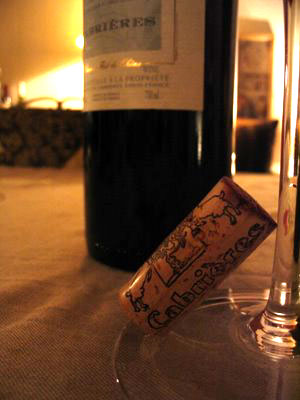
Château Cabrières corkUnless the bottle turned out to be corked, you would have to be a fairly perverse individual not to love the wine that features each of the above attributes.

I rushed out to buy replacement bottles of this wine. The sale had ended but I didn't care. Because even at $21 (I had discovered it for only $15) this stuff totally turns my crank. In the best words I can muster, here's how that works:

This wine is nearly the end of its design life, but so much the better. There's an orange rim around a very dark purple robe. Deep notes of leather and animal make me want to inhale the aroma of this wine continously. There's even a hint of bacon. Awesome!

Echoes of spice and garrigue pervade. But after greater analysis, I get rust and raisin and chocolate. Château Cabrières Rouge has a generous body on it and after five years, I suspect it is at its most limber. There is integrated and well-proportioned acid and a beautifully soft tannic presence.

I guess if nothing else I would have to call this wine complex. I end up tasting and pondering the stuff all through dinner, which by the way, was a lamb chop -- the magical 4th item to the list above if ever there was one. But back to the wine's complexity: It's got pomegranate and molasses and burnt sugar. And did I mention fruit? Perfectly savoury and delicious fruit -- what you'd expect from any Midi red -- is well represented in this shimmering and multifaceted gem of a wine.

Château Cabrières doesn't need food but if you are at the dinner table I would definitely recommend that you give it the little lamb that it deserves. With some quick grilling, your meat will complement the wine magnificently.

Cave de Cabrières, Cabrières, France. 14%.

20060412

WBW #20 Roussanne and Grenache Blanc: Château Roquebrun 2004 (blanc)

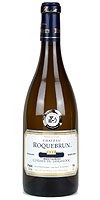
Château Roquebrun Coteaux du Languedoc 2004
Rosemary is the first thing I think about when I'm reaching for Château Roquebrun's white wine. Rosemary is an odd spice in a white, but I think comes out of three different aspects of this wonderful blend from the Midi in Southern France.

The first aspect is the beautiful intensity of this wine. It is concentrated and full. There's a mouthfilling attack, much like biting into a fresh rosemary sprig.
Secondly, there's an herbaceousness on the palate that you can't deny. Descriptive record after descriptive record says that this wine presents a pleasurable grapefruit flavour, and I can't argue that. Citrus is there, but that astringency also reminds me of piny herbal notes.

Speaking of pines, the wood in this wine is not shy. It's oak barrelled, which is the third aspect I'm talking about because an extra jolt of tannin brings me back to that slightly woody rosemary feel.

What, you hate rosemary? Forget I mentioned it. Château Roquebrun Coteaux du Languedoc 2004 is a superbly balanced wine. There are yeasty notes, baked pear, plus a floral and mineral nose. It's amber to golden in colour. And a bracing vineux finish that reminds you what a remarkable value this really is. I guess what I want to say is that there is something for everyone in this bottle.

SMOOTH LIKE CHARD, REFRESHING LIKE SAUVIGNON

If you still need convincing, let me tell you about how easy it is to pair with dinner. I don't know much about the Roussanne that makes up 80% of this blend, but in this particular case it seems to shapeshift to suggest both classic Chardonnay and classic Sauvignon Blanc pairings.

I've had it with creamy sauces and straight-ahead fish dishes. Exotic cuisine is no trouble either. A mild chicken jalfrezi, with its luscious coconut and sweet pepper, is a match. The innate sweetness of the wine (I'd say it approaches semi-dry just because it's almost as sweet as a Chenin Blanc) is perfect for Indian food.

A composed lettuce salad topped by mounds of tuna and capers, sliced carrots, blanched onions and cubed potatoes is another way you could go. I like to boil a medium-dice of grelot potatoes in a heavily flavoured beef stock. Remove just as they become tender. Then throw in sliced onion for thirty seconds. Then I rip up a Boston lettuce and add to it a balsamic and rice vinegar dressing. Top it all off with the garnishes and voilà: a nice composed salad and this Château Roquebrun Coteaux du Languedoc 2004 is at your service.

(Thanks to Bill at Wine for Newbies for hosting this month.)

Cave de Roquebrun, Roquebrun, France. 13%.

20051214

How dumb was that? Devois des Agneaux d'Aumelas 1999

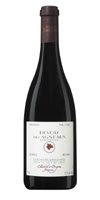
Devois des Agneaux d'Aumelas 1999
I taste little obvious fruit in Jeanjean's Devois des Agneaux d'Aumelas 1999 at first. What is there is very faint and unripened in flavour: raspberry, maybe cassis. At times the tartness verges into a vegetal bitterness. It reminds me of a wine from Anjou with its austere style. That idea would be intriguing to me except I'm opening a Syrah. So what's wrong here? My palate is off? Or is it the wine? Such would be the case with a "closed" wine or what is known as being "dumb". Dumb as in playing dumb since the bottle is fine -- it's not corked but rather is just not acting like it should. Closed as in temporarily -- or in a transitive state -- so you try to wait until the flavours that have shut down open up again. And wait, and wait...

Since 1870 the Famille Jeanjean has been bottling wines of great expression. Like many Languedoc wines, their bottles represent great value for the money. Château Valoussière, Coteaux du Languedoc is one of their great everyday wines, which I always recommend. Bring it along when you are invited to dinner and you will always get a positive reaction. Have it with merguez and saucisson, like I did with my friends Gordon and Eric, and you'll be as close as you can get to heaven for under $15. So it is no wonder that the Languedoc scene is burgeoning in recent years and growing in popularity. Witness a weekend last month, when Eric and I knew we were to sup in style. After browsing around on our own, we independently selected $19 Coteaux du Languedocs. He got a Château Saint-Martin Garrigue and I got the Domaine Clavel "Les Garrigues". Garrigue minds think alike!

But back to work: Devois des Agneaux d'Aumelas, Coteaux du Languedoc, Elisabeth and Brigette Jeanjean is a bit fancier than those above, but there it sits on my kitchen counter, all dressed up and nowhere to go. This cuvée was definitely not picking up where the Clavel had left off, that's for sure. I blamed myself at first. I had bought it at a reduced price because of a slightly damaged label. My thoughts turned to how I had stored it and how long I had kept it. The cork looked normal and no signs of leakage around the capsule presented themselves. There was no denying this 1999 its structure and complexity but it was still hitting all the wrong notes. Ones that clearly resonated in a bad way, like apple-cranberry sourness, a characteristic I hoped I would not begin to associate with the semi-aged wine of the region (I discovered a type of brownish cranberry-cola under the cork of a bottle of Domaine des Jougla Saint-Chinian 1999). So with time, I deem it dumb. But I felt dumb too for preparing the rare treat of filet mignon on this night. I try to salvage the situation in different ways. Giving it extra time to open up didn't change things much. Trying not to create Clavel-like expectations did more to help. I began agreeing with those tasters who proclaimed sage (not sure I appreciate that much in a wine), and I made the most of an odd changeable aroma. I moved it from Loire in style to Bourgogne. But dinner was over and it seemed as though I missed out big time. On the second night, I opted for the namesake on the bottle and poured the remaining wine with lamb. It was somewhat more satisfying but I still wondered whether I would've been right to return it to the store I bought it from.

Backwash
Thanks to Gordon for taking the image I posted in yesterday's space. He recalls not only taking the photo but also making the delicious pork loin sandwiches we ate with our wine. He had threatened to call both of his lawyers regarding these two omissions. To his intellectual property lawyer: I argue a fair dealing defense. To his French food litigator: Mets-en!