Facebook!

Twitter

Tumblr


Showing posts with label PREMIÈRES CÔTES DE BLAYE. Show all posts

20061005

Simple Sauvignon, for about a sawbuck: Château des Matards 2005

Château des Matards Premières Côtes de Blaye 2005
This is very nice example of strong, vibrant acidity regulated by minerality and a musky centre. Château des Matards Premières Côtes de Blaye 2005 offers lovely fruit and it offers some depth too, but what I most like about it is how it penetrates the palate as much as the acid seems to coat and tantalize it. Balance is perhaps the expression I'm searching for.

As an aperatif, the refreshment value is clear. Add some starch -- potatoes and garlic sautéed in butter and green onions, for instance -- and a second dimension of this wine comes out. This type of food, I'm guessing, acts to coat the mouth more, subduing the bracing mouthfeel this wine provides. Instead the minerality and slight muskiness that lies at the core of this cuvée is accentuated. With food or without, take it either way. The blend of Sauvignon Blanc and Muscadelle is winning.

The 2005 vintage is a very pleasing year for so many wines, especially Bordeaux whites. Château des Matards is the second one that has stood out to me. From the more storied expanses of Graves, (which is just downstream from the Côtes) Château Roquetaillade La Grange also convinces.

After yesterday's Marlborough argument, I needed some convincing and, in this, indeed there is quite a bit.

Terrigeol et fils "Le Pas D'Ozelle" St-Ciers-sur-Gironde, France. 12.5%.

20060316

Taking the house out of a good house wine: Château Lalande Bellevue 2003

Château Lalande Bellevue Premières Côtes de Blaye 2003
Yesterday, I pointed to a great picnic wine named Bellevue. Today I suggest another Bellevue. It's about the same price and has a similar French provenance, but this is no picnic wine. This is a Bordeaux, the wine enjoyed in drawing rooms and in Michelin-endorsed restaurants everywhere. But when a Bordeaux is a tremendous value and at an affordable price, why not take this wine out of the house and let it flow on a picnic? Instead of fresh salads and antipasti, bring lamb sandwiches. This stuff is a treat.

I was turned on by the 2002 vintage of Château Lalande Bellevue Premières Côtes de Blaye last year. It was marked down during a promotion. The discounted price was ridiculously low, especially for a wine with a Bordelais appellation. And one that earns the respect of a three-star review from Michel Phaneuf (who won Gourmand's best wine guide for the second consecutive year). The 2003 bottle made an appearance in stores several months ago, and after tasting it myself, and I can imagine Phaneuf giving it a rating just as good if not better than its predecessor.

A GOOD YEAR FOR BORDEAUX WINES

The 2003 harvest in Bordeaux is considered a good one. But it's important not to place too much emphasis on vintage. Plenty of bottles from lesser vintages end up worthy wines. What is important is cost -- because I'd like to know when the lauding of a vintage by experts ends up sending up the sticker price. Good news here is that there's been no jump in price for the Lalande Bellevue of the 2003 vintage -- just click on the bottle image above for pricing details.

Indeed, this vintage carries with it the graces of a vintage as valuable as 2003 was, and then some.

It's slightly vegetal in a perfectly delicious way. Nice nose, and as dark baked cherry and cassis ooze across your palate, the astringency kicks in: perky tannins and a dry and long finish, with vanilla and a hint of fruit. On the first night, the wine seemed tight but charming and perfumed. I served it with pork filet, sautéed red peppers and mashed potatoes. At the table, its echoes of acid melded to every mouthful of tenderloin like a match made in heaven. After aeration -- in this case a two days in the mini bottle -- Lalande Bellevue rendered itself strong in matter, yet deft and structured. The balance between the fruit and acid is really quite phenomenal. The finish is delicate but so persistant. This medium-to-full-bodied wine strangely seems lighter than air.

J. Espiot, Marcillac, Gironde, France. 12.5%.

20060214

Lots of red hearts, two elegant whites, one burning question

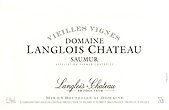
Veilles vielles Vines de Domaine Langlois-Chateau Saumur 2002My tech-writing friends Susan and Frank had me over for a very special dinner on Sunday. I had brought chocolate-orange hearts and a bottle of Château Haut-Bertinerie Premières Côtes de Blaye 2000 (below), a sophisticated Bordeaux from a stellar year. It was made uniquely from Sauvignon Blanc and harvested from vieilles vignes.

But from out of the fridge, Susan was handling another serious white: the
Vieilles Vignes du Domaine Langlois-Château Saumur 2002 (right), a Chenin Blanc varietal benefiting from the Loire's more recent spectacular vintage.

It was an embarrassment of riches. And seeing as I earlier recommended that Frank pick up the Langlois while it was on sale, I was asked to make the choice. Which should we open first? I knew they were baking trout and that they had prepared a salad to start, but the fourth dinner guest had not yet arrived. We would need a nice aperatif now.
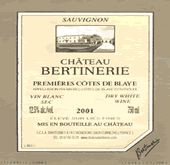
Chateau Haute-Bertonerie Premier Cote de Blay 2000I had had the Langlois as a aperatif before. I was among other friends at the time and none of us was very familiar with Chenin Blanc. We were a bit perplexed by its off-dryness and I thought that a grape with such body would do well with some rich food. Susan and Frank's fish was prepared without a sauce -- the richness that Chenin gravitates to -- and instead topped by herbs and caviar, but a lovely rich scalloped potato dish perfumed the room and it was signaling a potential pairing. So I opted to save the 2002 Chenin and go for the older, drier Bertinerie to start.

It was an immediate hit. It tasted even better than I remembered. Vineux, deep tones, excellently balanced. Yes, some Sauvignons can come across this confidently in room full of Chenins and Chardonnays. That 2000 vintage really was remarkable.

Nevertheless, as I drank my aged Sauvignon, I thought that a 2002 Chenin would prove to be no slouch either, and besides, it was not that much younger anyway. While it is rare to progress to younger bottles during a flight of wine, I remained sure of my ordering. The hosts, upon opening their Saumur, were not. They liked the Loire Langlois for its exotic, fruity aromas and noted its superb consistency, but Susan was a straight-shooter: "I'd have to argue that this kind of wine would do so very well on its own, while the smokiness of the Bordeaux would've been an excellent match with the fish."

She was absolutely right on this -- the oak in the Bertinerie was practically custom-made for her oven-cooked trout. Myself, I felt from the first sip of the Saumur that the difference in age actually was palpable, even though only two years separated them. Impossibly, the Chenin seemed lighter and more youthful than the Sauvignon, making my decision on which was the more alluring aperatif a bit off-base. Furthermore, thought the Bertinerie was indeed wonderful to enjoy on its own, when it was followed by the Langlois, the added sweetness of Chenin was not announced as loudly as I was expecting. I could have -- and should have -- reversed them. My worry of progressing to a sweeter wine was clearly unfounded.

But it was a great dinner with great wines -- no real complaint could be made. Instead, what could be made are orders for more of the Bertinerie, to be served with another meal of delicious fish.