Facebook!

Twitter

Tumblr


Showing posts with label MERLOT. Show all posts

20071228

Château Grinou makes my favourite wine of the year


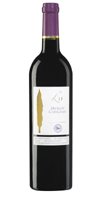
Grinou Réserve Rouge Bergerac 2005 (about $16)

A common theme on this annual best of list is catching the 2005s before they are replaced by the 2006s. Since 2005 was such a remarkable vintage in so many places it's not surprising to see this. But most of the acclaim for the harvest of 2005 is usually not placed on wines that are this cheap, and this good-drinking this early in their lifespan.

Here we have a young wine that seems too good to be true -- with already a firm grip and a youthful embrace it seems to know no growing pains. It's outlook is positive. It promises to only improve, which is to go from great to even better.

That what's doubly incredible about the 2005 Grinou Réserve. This lusty Merlot varietal from Bergerac, a region just outside of Bordeaux, is a keeper. Winemakers Catherine and Guy Cuisset give this cuvée a full ten years of prime drinking time, so it's peak time may not yet have arrived. Buy up cases while you can.

If that sentiment sounds familiar it's because it was first uttered by Joe of Joe's Wine back in September. At that time, he gave this bargain an admirable score among heavier hitters. I'll be monitoring that score as it likely will go up when Joe revisits it in years to come. Thanks
Joe for sounding the alarm on this one.

Meanwhile, who will be the first to report back here on the 2006 Réserve? Michel Phaneuf gave it a similarly strong review in his 2008 guidebook but he leaves out any promise of future development that somehow the 2005 managed at under $16.

Eyes: The colour is a richly-hued purple.

Nose: Had a few problems with cork taint in opening about a half-dozen of these over the course of the year and the nose can be a bit funny -- is it sour cherry? -- it suggests something mineral but at first it's quite funky as well.

Mouth: Incredibly smooth on the palate, greeting you with intense, mouth-filling spicy oak and fruit of great depth. Mid-palate turns towards earthy tones and licorice. Finish is very long and lovely lengthy plummy note etched with a slight rasp of acidity that just leaves you wanting another taste. To me, this nears perfection. A well-crafted wine, with totally integrated wood. When I dissect it, it comes across like a textbook example. And it's $16! Why? Because the B is for Bergerac, not Bordeaux.

Stomach: With the rustic cuisine I tend to make, this wine is put somewhat into misuse. I had a heavy lamb pot pie full of butter and hot spice. The wine's body, which was medium, became even less present. Spicy food is not good for it. The black fruit came through less than the minerality, making it stricter than it needed to be.

20071112

My dinner with Conte Brandolini d'Adda Vistorta 2004


This is a wine that figures more prominently in the mind than it does in the cellar -- I think about it more than I drink it. And I refer to it more than I review it.

In fact, this is the first real tasting note I've done for this cuvée, and only the third bottle of it that I've ever opened. So reverence coloured my note-taking, which in my books means harsher judgment and tougher evaluation rather than the reverse.

But that always happens when your first experience with a certain wine lights up your circuits. That was the 2000 Vistorta, which I mentioned in this site's first review of a New World varietal (I also alluded to it in a comparison of mass-produced Merlots and again recently during Wine Label Week #1). The way I see it, that 2000 vintage far outshone the 1999, and laid the groundwork to earning the 2003 a coveted five-star review from Michel Phaneuf (his latest release Le Guide du Vin 2008 should be out this week -- will it honour the 2004 in similar fashion?).

A NOTE ON THE SOIL TYPE

I love trying to trump Phaneuf, but before I attempt to predict his evaluation of the current Visorta vintage in stores, here is a note on the type -- soil type.

The Grave in the large Italian appellation of Grave del Friuli, northeast of Venice, might conjure up Bordeaux by way of Graves, if not Pomerol. This is appropriate as both the Italian and the French Grave designations come from the same root word which signifies the gravel that generously blankets both regions. But here's where the suggestive name that makes up a wine's designation can fool you.

Vistorta's vines do not sprout up from gravelly soil. Further afield from the central lowlands of Friuli, which have plenty of gravel, Vistorta's estates in Sacile border on Piave and feature soil types that are limestone and clay.

Winemakers says that this, not gravel, is "an ideal base ... with the same characteristics found in the Bordeaux and Médoc wine-producing areas, where the clay soils and hot and dry summers favour Merlot allowing it to express itself at its best."

Hmmm... That's a bait-and-switch, isn't it? Storied Bordeaux Merlot is more right bank than left, and Merlot ripens early so how is a long hot summer going to help? It seems to me the Vistorta people don't have the Grave-Graves connection that would align them more closely with Pomerol and they are trying to sidestep their way to Claret. I am being too cynical?

MY NOTES ON THE CURRENT VINTAGE

This wine does not need convincing -- I guess that is ultimately what I am trying to get at. But many Friuli wines still carry a reputation for a thin bitter body, so I suppose Vistorta is one winery that wants to throw down its claim to convince the first-time buyer before the corks pop, at which point the convincing really begins.

I'm not a first-time buyer, but here's what happened when my most recent Vistorta cork popped...

Conte Brandolini d'Adda Vistorta Grave del Friuli Merlot 2004

Eyes: Medium ruby in colour, exhibiting clarity and little tinge around the rim.

Nose: No shortage of aromatics, yet it still suggests itself as a developing wine. Candied rinds, spices and a sweetish component. Youthfulness on the nose wears off with some time and soon in my glass I'm getting cotton candy, pomegranate, honeycomb and some very well-integrated vanilla.

Mouth: Not a lot of surprises here after spending so much time nosing this wine. It's typical of a Merlot varietal -- damson plum and flowers. (Though the flowers convey some greenness, I still think they are violets.) Quite dry and sporting a lively acidity, this is still on the incline with no doubt several years in it once it peaks. Right now, the tannins are thoroughly drying and there's only a moderate flavour intensity with a medium-to-full body. It's not reaching the heights of the 2000, or at least not yet anyway. Clearly, this is a great expression and a superb wine nonetheless.

Stomach: Some tasting notes -- usually the concluding ones -- aren't rendered until I actively decide what dinner will complement the wine I've got. I find often it's the food you're eating that will help you nail down the essence of a bottle. In this context, food is not only pleasurable, it's quite instructive too. So for the remaining wine I saved for the next night, I made a rich, heavily caramelly meal. This was drawn up as a match for the blackened fruit and caramel tones the Vistorta possesses -- that's my overall sense of the wine that I didn't even note. I prepared carbonized carrots with caramelized onions, broccoli roasted in the oven until the florets started to singe, and my old standby of Parmesan-breaded chicken breast fried in brown (burnt) butter.

Azienda Agricola Vistorta, Brandino Brandolini d'Adda, Friuli (DOC) Grave, Italia. 13%.

20070224

Two versions of Merlot (from way down low): Domaine Campradel & Fortant de France 2005

Following a familiar grape as it travels down toward the Mediterranean to ripen and then takes sticker prices south as well
Domaine Campradel Vin de Pays D'Oc Merlot 2005Fortant de France Vin de Pays D'Oc Merlot 2005
Here are two Merlots that dip way down low, in terms of vineyard location and also in terms of retail pricepoint. These do not come from the land of Pomerol or Friuli or any other Merlot-centric region (which capitalize on the grape variety's ability to perform well in relatively cooler climates). Perhaps not coming from any of those places is partly why these versions demand less money. Indeed these are not Bordeaux by a long shot. These are from the sunny Midi (which has a much warmer climate), and at the very least it offers something a lot of Bordeaux and Northern Italian reds can't offer. Bargain Merlot.

Basement-bin bargain Merlot. These two bottles are among the cheapest recent shipments in Quebec. Click on the images for detailed product information.

Of Merlot, a traditional grape within the Bordeaux blend and mainstay in the areas surrounding the Gironde and Gascony, Jancis Robinson contributes the following to her Oxford Companion to Wine:

With Syrah, Merlot has been a major beneficiary of the Languedoc's recent replanting with 'improving' grape varieties. Total plantings in the Languedoc more than doubled between 1988 and 1998 to reach 18,500 ha. Most of this is destined for vins de pays for the only Languedoc appellations to sanction Merlot within their regulations are Cabardès and Côtes de la Malepère. Merlot has been a much more successful import here than Cabernet Sauvignon and can produce some good value, fruity wines for drinking young, many of which were shipped to the United States in the mid 1990s to satisfy American demand for this most fashionable of wines.
These two bottles of Merlot definitely have the potential to be great buys -- they come in at roughly $10 a bottle -- though in these post-Sideways days, one wonders how fashionable these bottles really are. Popular trends aside, since they are produced from the same grape variety from the same wine region from the same vintage, it seemed so natural for me to compare them in a single post. Yet despite their "face-value" commonalities, I looked closer to unpack some issues around the production of these wines.

DOES BARGAIN WINE CROSS OVER INTO CORPORATE WINE?

I wondered whether there might be another reason why these wines are so inexpensive. It may have something to do with the fact that they have come out of fairly big, fairly international machines. They are not examples of corporate wine though, or at least I am not considering them to be.

While the Fortant de France brand is part of the massive holdings of the Skalli Family -- the first French producers to make a splash with wine that touted grape variety rather than appellation -- it still captures a certain place and certain time. When done tastefully, isn't that the most honourable trait of the winemaker, no matter how extensively his family of producers stretch out around the world? ... No matter how much the gimmickry of a certain grape variety on the label may try to usurp that place and time?

Of the two, I actually prefer the Domaine Campradel Vin de Pays D'Oc Merlot 2005 though. I would gladly recommend it over the Fortant de France Vin de Pays D'Oc Merlot 2005, comments above notwithstanding. Domaine Campradel is one of some 40 French estates that produce under the Louis Bernard seal. The Rhône-based Louis Bernard brand you might see on bottles is, more than anything, an alliance between the growers or récoltants and the merchants or négociants, which are what Boisset America, importer of Louis Bernard wine, term as expert sales and management teams. (Corporate-sounding, yes, but no wine production process here is owned or managed by a corporation.) The Boisset America web site explains the relationship with synergistic fervour: "Because the members of the executive team are also wine specialists, a commitment to quality wine is maintained on every level." Where there's a claim to quality wine, my open mouth is never far behind.

THE TASTING NOTES START HERE

The Campradel was fairly opaque and deep red in the glass and noticeably richer to the eye than the other Merlot. (Though of the two, the Campradel started out colder which seems to make a difference to the eye when you pour it out -- has anyone else noticed this?) It had a nice brick edge. It was surprising to contrast this with the light fuschia colour and transluscent appearance of the Fortant.

Both Merlots gave off an aroma of sour cherry but the way they tasted seemed to be a direct extension of the way they looked, giving Campradel an edge as a greater value wine. It was full of savoury fruit ranging from cherry to berry to plum to stewed prunes. It had a lovely finish and final note that came off a bit like burnt sugar. Very lovely. Overall it was the wine with a deeper profile.

The Fortant had as much body as the Campradel, but lacked the depth and personality. It did not seem to present much character at all, which is a harsh blow that makes Fortant's varietal endeavour feel more than a bit hollow. But with time, this changed. A greenish run within it that made the wine seem quite astringent finally opened up to reveal promising cocoa tones. It's a wine for splashing about and if you decant it the pay-off is there: Merlot and all its chocolatey smoothness and approachability, a perfect partner for lip-smacking desserts, as the Fortant label suggests.

In the end, quite different directions for these two $10 Merlots from the 2005 Pays d'Oc harvest. I opt for the Campradel and how it pairs readily with dinner. Although I suspect the Fortant has its own equally valuable role too, it's not as impressive.

Orange, Vauclause, France. 14%; Sète, France. 13%.

20060322

A Mont Tauch souvenir from Michel Marty: L'If 2003

L'If 2003 carignan merlot vin de pays
This French vin de pays is supposed to be a half-and-half. Half Carignan for rustic flavour, half Merlot for plummy smoothness. The combination is greater than the sum of the parts. This is a caramelly, darkly spiced and beautifully fruity wine.

The L'If 2003 by the Mont Tauch co-operative needed to open up a bit. To look at, it was a deep red colour out of the bottle and there was fruit was on the nose. On the palate it began to differentiate itself: All blackberries and violet with a caramel centre that seemed to extend its length in the mouth. A marvellous concoction. Made me think of little pots of lavender-infused crème caramel.

THE GRAPE BREAKDOWN

The Merlot is quite transformed here. That it made up 50% of the blend surprised me. This certainly didn't remind me of any Merlot I've had. As for the Carignan, it strongly conveyed a Spanish style. But what's important is how the two grapes work together to assemble a tremendously successful and distinctive wine. It's that caramelly length buffered by dark spiced fruit that really drives me wild. I rebottled the leftovers and looked forward to it the next night.

On the second evening all the tightness in the wine was thoroughly rounded. Port-like qualities pushed this Mont Tauch bottle further west from Spain into Portugal. A distinctive and awesome bottle. Now I'm on the look-out for similar blends.

WHERE THIS WINE IS COMING FROM

It's the first I've noticed a blend like this, though definitely not the first Mont Tauch bottle I've enjoyed (i.e. See Wine pig). I am quite fond of this area in the South of France that mostly goes by the name Fitou (though this appellation gets dropped for products like L'If, which operate on less restrictive Vin de Pays categories like du Torgan).

This Fitou web page I bookmarked a while ago actually mentions L'If winemaker Michel Marty and his name is certainly one I'll retain for future reference. He is referred to as an oenologue on the bottle label. That's colourful. So is the depiction of an if -- actually a type of tree -- on the bottle label. Apparently a devastating forest in the town of Tuchan in 1885 left one sole if standing on Mont Tauch. That tree, once a symbol of the village, is now the inspiration for this wine.

I don't know if that snippet is going to satisfy my burgeoning interest in the Merlot/Carignan combination Marty has crafted. It's a quaint tale meant to draw to wine buyer in for that first taste. Once you've tasted it, you forget about the trees and want to know more about the story of these grapevines.

Mont Tauch, Tuchan, France. 13%.

20060110

Etchart beats a path to your wine shop: Etchart Rio de Plata 2003

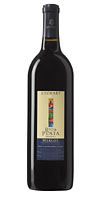
Etchart Rio de Plata Merlot 2003
Etchart is probably Argentina's most dependable wine producer. They are one of the most established too. From its wine pressed from the white Torrontes grape to that of Cabernet Sauvignon -- the more well-known resident of the Cafayate Valley atop the Salta region -- budget-minded folks are rewarded by returning to this producer year in and year out. Michel Phaneuf has routinely recommended the full gamut of their products in Quebec for the last three vintages running.

From the region of Mendoza comes the Etchart Rio de Plata Merlot 2003. While the 2004 is now the release most stocked on shelves and is ready to be drunk, the 2003 is still full of richness and character. International in style, this Merlot excelerates alongside roasted food. At first it seemed to be calling out for accompaniment, but this low pricepoint purchase is more substantial than you think. It builds up notes of chocolate and hyperripened berry fruit. So much so that I began to believe that for $10 more I might've gotten a similar punch out of a Barbaresco. Rio de Plata has a strong nose and the big chewy tannins that you might expect from a Merlot varietal. It's definitely no Conti Brandolini d'Adda Vistorta, but it doesn't aim to be either.

With this particular bottle I proved to myself that a container of appropriate size with a good seal can keep leftover wine in good drinkable condition for up to a week. Obviously not all wine will gain something or sustain itself after recorking, but so many bottles I open do, especially from the 2003 vintage (being mainly an Old World wine consumer has something to do with that since European harvests were so spectacular that year). Regardless, this Mendoza is another case in point: treat your leftovers with respect and you'll be repaid for it. Three evenings after its initial opening, the wine was every bit as enjoyable. But what is fine on the first day will be oxidized the next if you allow air to take up space in your bottle. Minimize the amount of air space that remains in your mini-bottle. This will also reduce the surface area of the wine, which is important. Screw-top mini-bottles are even better for this since you don't have to guesstimate for the displacement of an inserted cork.

Lujan de Cuyo, Mendoza, Argentina. 13%.