Facebook!

Twitter

Tumblr


Showing posts with label WLW 1. Show all posts

20071008

Wine Label Week wrap-up, plus a 1945 Korbel and a 2003-2005 Brandolini

No WLW is complete without a wrap-up, so this post includes a summary of the proceedings of the last week of September, the very first Wine Label Week aka WBW 1.

See bulleted items below for how wine labels are implemented (correctly, and unfortunately, incorrectly). But rather than ending WLW on a cynical note, I'd like to emphasize the comments and emails I received. Many visitors left insightful comments, which is great -- I appreciate them and give thanks for them. One visitor even sent me a photo of his most prized label from 1945, which is cool because I was waiting for a reason to run my favourite label. (Thanks Joe!)

NEW SAQ ENABLES THE LABELS

People are interested in wine labels. I think there's a new trend toward valuing data like what is presented on the wine label. In fact, the SAQ -- the state-run wine distributor in Quebec -- has just redesigned its website to allow for a greater focus on wine labeling information. This means expanded information on current vintages of the bottles detailed on saq.com profile pages. And they increasingly include images of bottles and their labels.

I applaud this -- though the SAQ redesign means the hyperlinks on my site which used to navigate to inidividual wine profiles at saq.com no longer work. I will have re-code them one by one. Please bear with me as I redirect links to the spiffy new SAQ listings. At the very least, this tedious process will allow me to start pointing to the English pages at saq.com, something I was unable to do before, but as demonstrated below, can now do!

Here are a couple of favourite wine labels from WLW 1 -- a personal fave of mine and Joe's favourite label, which attaches to the oldest bottle he owns, a 1945 Korbel Brut! Click on each label image to be linked into the brand new SAQ profile pages for even more labeling information for these wines.


Whoops, actually the SAQ carries neither of these wines. Too bad.

A SUMMARY OF WINE LABEL WEEK

Wine labels exist to convey important information about bottle contents, not the least of which is a wine's designation, critically acting as a kind of quality assurance system

  • A breakdown and analysis of label information was introduced on Monday

Labels, which allow a winemakers to market their wares better than almost anything else, can actually be an expensive undertaking and considering their cost, they are surprisingly not always perfect
  • In investigating labels on Tuesday and Wednesday, we saw mistakes or incorrect information, namely alcohol by volume (abv) discrepencies on the label that indicated levels beyond tolerance:
In terms of discrepancies between the actual abv of the liquid and that stated on the label, in Europe the abv on the label must rounded up or down to a whole or half percent. So if the wine is 13.1%, the producer can choose to label it as 13% or 13.5%. In the EU, a label that states the more exact 13.1% would be illegal, presumably for some bizarre bureaucratic reason. The tolerance for sparkling wine is 0.8% in the EU. NB these tolerances are lower than in many other countries, including South Africa, Australia and the US (for wines produced and sold in those countries).
    - Julia Harding, from the forum at JancisRobinson.com, where participants noted that the label expense often encourage winemakers to use labels from previous vintages with crucial updates made to the information that deviates from year to year, but these changes are corrected on the label with varying degrees of success.

The promotional elements of a label may be nice to look at or read, and they can affect your perception of a wine but ultimately judging a wine by its label can be a very difficult task
  • On Thursday, label details and especially prettied-up labels were acknowledged to influence shoppers and even evaluators, which is one reason blind tastings exist.

You can glean other things from the tradition and customs involved in labeling
  • The absence of a vintage label on Friday led to interesting assumptions about a wine's origin.

All in all, wine label information is serious business. Virtually all New World wines are labeled by grape variety but it's illegal to label a wine with a certain variety when it is actually another. Equally Old World wines can be fraudulent for falsely appropriating a wine designation and this has been in the news recently for misrepresentation.

And if you're wondering why my favourite wine label -- it's the one with the heart -- seems to be misrepresenting by neither specifying a wine designation, a grape variety or a vintage year, it's because the wine has none of those things: A blend of three grapes harvested over three years (hence the name "Treanni") by a winemaker that needs no designation. Friuli's Conte Brandolini d'Adda is the future of wine labeling because its singular and artful approach is all you need to know to buy its wines. Now if only I could find myself a bottle with this label. Here's a lead.

20070930

Labeling information depicts a branch on a family tree

renaud pere engineer uqam montreal quebec

Something about looking at wine labels really intrigues me -- the fact that they combine factual data with regional cultural influences, whether those might be purely label-design elements or wine labeling requirements specific to a designated viticultural area.

And so, with that in mind we finally reach the crescendo of WLW #1.

Friday's installment of Wine Label Week was sort of pre-empted to bring news that we Canadians are bigger drinkers than ever. This is a "label" that didn't surprise me, and in fact I think it could be expected with the number of people I know who are newly interested in buying and discovering wine. Nonetheless the stats that were released point to a significant trend worth looking at and in that regard I wanted to post an entry on it.

I also wanted to post it since the post I have here today was still being assessed by the experts on Friday. I refer to my "mystery wine" and its a mysterious label pictured here. For it, I turned to the helpful and resourceful folks on the members' forum at JancisRobinson.com.

MYSTERIOUS WINE WITH LABELING MYSTERY

As we can see, this label's different from previous examples during WLW. Yes, the designation is there -- it's an A.O.C. from Beaune, 1er cru -- putting its geographical origin in Burgundy. The vintage year is where things deviate intriguingly. Someone has written directly on the glass bottle in felt pen or paint above the front label.

Was this written by the winemaker? And is there a particular practice indicated by this? That was essentially my question to the wine forum.

And the answer, as suggested by Jancis Robinson herself yesterday, is that hand-written vintage years do indeed imply that the bottle would have come direct from its maker.

Perhaps what's most striking about all this is where did I manage to come across such a bottle, especially since I have not been to Choreys-lès-Beaune since the summer of 2000, when this wine would've still been very much cellared away in some quai.

The truth is that I found this bottle about three months ago. It was left behind in a vacated apartment adjacent to mine and I immediately took interest in it when I saw it. (Unfortunately, it was already empty but, as I said, I do gravitate to wine labels and might be well on my way to full-fledged vintitulism, the practice of wine label collecting.)

In any case, it was only in researching the winemaker when preparing this post that I realized something all of a sudden. The previous tenant had shared his surname with the one on the bottle's label.

With seemingly direct access to a Beaune domaine, this is one neighbour in whom I am kicking myself for not taking a keener interest while we were still neighbours. (I have no idea of his whereabouts now and in fact have been sending back any mail that continues to arrive, marked Déménagé in large letters.)

Who knew a link to a cellar full of Beaune 1er cru could've been as close as just across the hall?

20070927

Colourful cottage wines and Brumont Gros Manseng/Sauvignon 2006

bruemont les cotes gascogne sauvignon blanc grosse manseng white wine        duperee barera terre de mediterranean red wine   fortent de france syrah rose wineChâteau Montauriol Les Hauts de Montauriol 2001
When I was asked to pick out the four best "cottage" wines -- inexpensive, chillable wines built for enjoyment with food and on a shoestring budget -- I put together a basket of these four. It turned out that they were the wines with the most colourful labels you could possibly assemble while browsing the aisles at my wine shop.

Coincidence?

I promise you I didn't buy these wines because of their labels, but clearly people do. The people I shopped for said that each on went down beautifully. But did they do it blind? Could they have been swayed by the pretty labels set out before them? Though we are in the middle of Wine Label Week here at Doktor Weingolb I am sorry to say that we may never know.

What we do know is that this sunny foursome of a flight started off with what must be the value wine of the summer: the Brumont Gros Manseng/Sauvignon Vin de Pays des Côtes du Gascogne 2006 -- it's the green one at the left.

It's anything but green. A nose of lemon meringue pie; a palate of grass and citrus that is pulled down by une trame de gras, or a perceptible layer of fattiness, without coming off at all oily. This wine has admirable balance, and in between, presents nice acid and weight with that smidgen of fat and sweetness on the finish.

I think this wine lacks minerality, though many people have called it mineral. Not in my books. But in my books, there's nothing wrong with not being mineral. So this wine is a bit of a cream puff, at its core I get a strong musky confit which punctuates the wine but doesn't diminish its soft, gentle and somewhat subtle elegance. Simply astounding for what was the cheapest wine of the bunch!

Pair it with a buttery or rich breaded chicken dish supported by greens or garden fare. Or have it as the best aperitif you can buy with a dozen dollars and change.

But you don't have to take my word on it.

THIS SUMMER, PEOPLE WHO LOVED A COLOURFUL GREEN LABEL


There are no doubt other favourable reviews I encountered during the summer for this Brumont, a wine that is better than ever (and which just HAPPENS to have a newly designed label this year... yes, it is a coincidence -- there's no established link between pretty labels and good wine.)

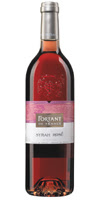
Click on the other cottage wine bottles across the top of the page for reviews of previously released vintages. Each of them in their latest version is delicious (except for the Syrah rosé which I have never tasted and cannot not really vouch for other than to say that it sports the reliability and great pricepoint often wielded by wines bearing the Fortant name -- now that's how to read a label! The Fortant label alone is why I bought it for my cottage-bound friends.

20070926

How to interpret a wine labeler

The last entry in Wine Label Week was entitled "How to interpret a wine label" and featured good tips and valuable lessons on getting important facts from a wine label. It just might make dinner go a little more smoothly if you carefully examine that label on the bottle. The label is going to give you some good clues on what the wine will taste like without uncorking the bottle.

Here's another label that's worth a gander.

jay moore o and sons pinot noir burgundy red wine
... But not so much for what it tells you about the wine contained inside. More than anything else, this is a good example of how, based solely on a wine label, you can tell a lot about the wine labeler:

upside down label on wine bottle

Drunk!

Stay tuned tomorrow as Wine Label Week continues because I will post what I'd say was the most unanimously reviewed best-value wine of the summer. Hint: It's definitely got a label.

20070925

How to interpret a wine label

vieilles vignes val de loire SB domaine sauger et fils fresnes france terra vitisHere's a wine I bought based on the label. It's a Cheverny. I interpreted that to mean that it would be a Sauvignon Blanc varietal, the type of refreshing and appetizing wine that's affordable, serviceable and, these days, quite crowd-pleasing.

After noting the wine's designation, my eyes went to the year of vintage. It was 2005, which played in its favour, if for no other reason than it was fresh and not past its peak. (Many say that 2005 was a great year all across France and for white wines in particular so that was another consideration in my purchase.)

At this point, I wasn't quite ready to buy the bottle yet. In addition to the price tag, my eye would be drawn to one other place on label that most people ignore: The percentage alcohol by volume. A weird place to look when you first are picking up a bottle but it's natural for me. I go from wine designation, to vintage, to alcohol level.

This is because I don't like "hot" wines, not because I'm inclined to getting a quicker buzz when I drink. Those wines that have alcohol measuring 14% and above (even alcohol of lesser proportions in white wines) have a greater potential to seem hot. That's not to say that heavily alcoholized wines like Zinfandel and Amarone can't be balanced -- I'm just always on the lookout for that percentage captured in the lower corner of the wine label.

GETTING THE FACTS UP FRONT

The Oxford Companion to Wine says the labeling information for alcoholic content that appears on a wine label is usually stated as a percentage followed by '% vol' but may be expressed in degrees (°) or, in Italy in particular, as gradi.

For the wine pictured at right above (click for a larger view of its label), the typical percentage measurement was given, coming in at an expectedly light 12% alcohol -- at the low end of the scale but certainly well within the norm for white wines of this type. I made a mental note, and by virtue of this, plus the vintage and designation, I went for this bottle.

When I finally opened it, I knew there was some mistake. It was as if this odd shaped wine label had its grayish circular frontspiece peeled away to reveal a bright red octagon -- STOP! (Just take another look at the shape of the label...)

This 12% Sauvignon tasted like its 14.5% cousin produced by Grand Marnier in Chile's Valle del Rapel. It was incredibly hot, with the alcohol expressing itself in a searing, unpalatable, and thoroughly unbalanced way. I was amazed that a 12% wine could taste this alcoholic.

Ontario Agent RKW wine imports cheverny LCBOIt was at that point I checked the percentage again. This time the label said 14.2%. I did a double take. But how could that be?

A ROUNDABOUT WAY TO TRUTH IN LABELING

It turned out the back label indicated a level of alcohol more than 2% higher than the front label (see image at left). From tasting this wine, it was clear that the back label was correct and the front label was lying. But I bought the wine based on what the front label said, as one could expect.

I had to refer to the Oxford one more time. It said: Alcohol tolerances vary considerably and can be as high as 2 percent alcohol in the US.

Although this wasn't the US, I could tell that this wine's labels were playing fast and loose with the tolerance standard, a rule that ultimately would allow having two different readings for a single wine and have them vary by an industry-accepted margin of error, and still have each of them be considered accurate!

I won't buy 14%+ alcohol Sauvignon so I took this bottle back outright.

THE MORAL OF THE STORY

A bottle of wine can have one, two, three or even four separate wine labels affixed to it. Any one of them can carry pertinent information and it pays to look at each of them before making a purchase.

Tomorrow: How to interpret wine labelers!

20070924

Labels... Who needs them?

spanish red wine label guide how to interpret what that wine label meansWe all need them. I'd go freaking nuts if there were no labels around when it comes around to wine time.

The wine label on your bottle indicates so many different things that shape a wine on many different levels. We're talking appellation, place of origin, type or style, vintage, alcohol level, producer, vineyard, bottler, or importer... the list goes on and on and each of these things greatly affects whether you're going to best appreciate the bottle.

WHAT TO LOOK FOR ON A LABEL WHEN SURVEYING A WINE BOTTLE

The following are the main categories suggested by Jancis Robinson as the typically mandatory bits of information on a given wine label, although national or international minimum criteria may be stricter on a local or regional basis.

For each of the following label information categories, I've included a real-life example. The example is based upon the Prado Rey bottle of wine you see pictured at left. Click on it to enlarge it if you wish to follow along with what's what on a typical label.

- Wine designation: Denominación de Origen (or D.O. -- an official Spanish appellation desginating quality)
- Geographical reference: Ribera del Duero
- Volume: 750 millilitres (standard wine bottle size)
- Alcoholic strength: 13%
- Vintage year: 2001
- Name and address of producer: Real Sitio Ventosilla (S.A.) Gumiel de Marcado, España, EU (it's Spanish wine!)
- Bottling information: Estate bottled (written in red across the image and since I bought this in Quebec, it's also in French print mis en bouteilles à la propriété -- is that missing "r" a typo?)
- Varietal information: none specified (this is likely a blend of grape varieties)
- Gratuitous government interference: something on the back about containing sulphites
- Sweetness: none specified (most wines, especially dry wine which are in the vast majority)
- Fizziness: none specified (this does not apply since it is not a fizzy wine)

I would also add these other types of information to look for on your wine bottle.
- Product Origin: Spain
- Type of Wine: Red
- Style of Wine: Crianza (separate top label, cut off from photo)
- Importer: Bergeron-Les-Vins
- Product Number: +929034 (useful when shopping for a specific bottle)

grenache tartinade spread when is grenache not a grapeBased on this, you glean a few things from the wine you are about to uncork.

WHAT NOT TO LOOK FOR IN A LABEL

One major way the label helps is it signals low quality as in serious plonk or if you're in for an unpleasant surprise. I'd say be careful if your label doesn't sport at least five of the label items listed on this page. Otherwise you might be in unchartered territory.

For example, take the contents held in the glass container at right. Sure, you've got grape varietal information (Grenache), volume -- oh wait that's weight (907 grams), and something vague about the producer being in the business for a long time (Since 1932 -- glad that's not the vintage year!) ... ah, how old-fashioned and quaint. But don't be fooled! That "caramel" claim is not exactly a suggestive wine tasting note.

As a wino, I'd definitely avoid cracking open this one.

Never trust a wine that you can spread with a knife! (Or, for that matter, a wine label that depicts children licking their lips...)

20070923

WLW #1: First-ever Wine Label Week September 24-30


Before I become the David Cronenberg of wine blogging, I'm going to radically shift the recent trend of dark and foreboding posts around here, i.e., Damaged Goods I & II, which centred on mutilation -- both oenological mutilation and the bodily kind too.

(Basically, in those entries, I realized that I'm the type of wino that will go down with the ship: the discovery of tainted wine leads to painful blood blisters from resealing the contents by hand; and furthermore, when spoiled wine unexpectedly happens in the middle of dinner at a BYO resto, too hastily speeding your ruined wine for an exchange suggested by your "sommelier for the evening" (who actually works at the wine shop up the street from the restaurant) can land you in a traffic accident if you are not careful. It's all a bit like the Cronenberg film Crash, but with wine all over the car seats instead of sex.)

So without further ado...

saint romaine bertram amboise 2001 premiere cote du blaye haute bertanerie 2000
Tweet, tweet... It's Wine Label Week! A sweeter, gentler, more mild-mannered approach to paying tribute to what's in the bottle. There will be some wine opened and tasted to be sure -- and I promise that whenever possible I will enlist cute budgies to help present the material -- but ultimately the focus next week will be on wine bottle labels. Specifically, what they can tell you about wine and what they can't.

At the end of September last year, Doktor Weingolb was ... hmmm, apparently posting lots of pictures of food from the looks of it ... and as such, missed the opportunity to launch Wine Label Week. For those of you keeping track, the first-ever theme week on this blog was last year's Portuguese Week or the great Semana português!

Btw: Doktor Weingolb is pleased to report that in 2007 Portuguese Week has spun off into something more like Portuguese Month, with Catavino hosting WBW 38 on the subject of wine from Portugal! Click here for details on how to prepare for that.

In the meantime, stay tuned for WLW #1: WTCTYAWWTC -- it's straight ahead!