Facebook!

Twitter

Tumblr


Showing posts with label ASK THE WINE EXPERT. Show all posts

20070321

Cooking with different wines, then tasting the results blind

most emailed story of the day new york times reports on wines best for cooking no good vs noble winesHere is a useful experiment performed by the Dining and Wine team at the New York Times. They've titled the piece It Boils Down to This: Cheap Wine Works Fine. Bravo!

If you're like me, you're a wino who's given some thought to the inherent loss that is cooking with wine. Sure, it's good for the recipe, but damn, is this what the winemaker really had in mind? Can anything in the world denature wine more than cooking it in pot filled with various and sundry flavours, even if heated only for a few seconds? If you place any value whatsoever on the bottle you've just opened, you've got to wonder if this way lies madness.

CHEAP WINE + COOKING = FINE DINING ?

Stop wondering. The answer is yes. Yes, basically it is madness. Cooking with wine over $20 is an unwarranted loss, a wrong-headed ego trip, against the laws of nature. I could go on. I exaggerate? Just read the article and you'll find out some of the science behind it. These tests employed clinical methods and you've got to appreciate the results, including conclusions like:

  • the tough and astringent tannic component of wine is the last remaining attribute you can identify in wine that's been cooked of all its subtleties
  • rather than wine's quality, wine's sweetness makes a more noticeable difference in food dishes
  • cheaper wines tend to integrate into dishes better than expensive ones (according to the panel, $70 Barolo actually made risotto taste worse while adding Two-Buck Chuck made it taste better -- if that doesn't add insult to injury to the deranged chef who approaches dangerously close to your wine cellar, what would?)
This kind of reverse psychology when dealing with wine as a kitchen ingredient doesn't really surprise me. After all, my second-ever post was about the benefits of cooking with Beaujolais nouveau, most hated of all wines here at Weingolb.

And yet a certain New York chef (make that executive chef, pardon me) who was interviewed for this story actually went on record to say that his restaurant always uses its expensive Barolos in its kitchens but when he cooks at home for himself he finds that he appreciates a cheaper wine in his food . . .
When I make the dish at home, I use a dolcetto d’Alba — a simpler wine from the same region — and honestly I like it even better.
Hmmm. No need to ponder long and hard about this. Now we all know why Mr. Executive Chef switches it up at home. The reasons are two-fold: because expensive wines are designed for the tasting glass, not the braising pan; and because he naturally prefers that his customers foot the huge wine bill rather than him! Bra-vo.

20061219

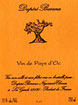
How to beat the Christmas shopping rush: Dupéré-Barrera Les Terres de Méditerranée 2004

"The more the experts proclaim their approval of great wines, the harder it becomes for the consumer to actually drink them."
_____________________________________________________

dupere barrera five star wine  Post updated 061221 in comments

_____________________________________________________

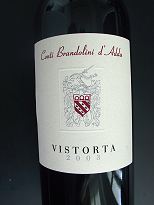
brandolini Vistorta 2003 sold out Phaneuf acclaimI've never seen so many wine shoppers as I have lately. All these new fellow shoppers... is it camaraderie or is it competition?

It's competition.

Despite the spirit of the season, I definitely see it as competition. HUGE competition at that. Bah humbug buddy, that bottle's mine!

The fact is that getting top-reviewed bottles is harder now than I can ever remember. Typically at this time of the year, winning the sought-after cuvée is tough. This particular year it practically takes a Christmas miracle to get your hands on it. Or so it seems to me.

I have seen what it takes to secure those prized bottles when new shipments trickle in and then immediately start selling like hotcakes. When party supplies need to be stocked up and year-end lists encourage further purchases, buying that bottle can certainly appear to be a lost cause.

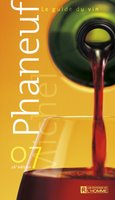
In Montreal, the main reason they sell like hotcakes is Michel Phaneuf, famed Quebecois wine writer. In my critical review of his Guide du Vin 2007, I suggested readers met with frustration when then opened the wine-buying guide because the annual survey of wines sold in the province was presented this year in a less user-friendly way than usual. I mostly discussed problems with its layout and ordering but one thing that caused me to meet frustration again and again was something I did not even mention. (I didn't mention it because it's the wine lover's paradox -- no fault of Phaneuf or his publishers.)

I'm talking about the well-known fact that the more the experts proclaim their approval of great wines, the harder it becomes for the consumer to actually drink them. Especially in the midst of a Christmas rush.

Recently Phaneuf has given some extremely affordable wines five-star reviews, a fairly unprecedented thing. As a result, it is impossible to get your hands on. When his wine newsletter let the cat out of the wine bag earlier this year, what short supply there was of the five-star Vistorta Merlot 2003 by Conti Brandolini d'Adda (pictured above) fast depleted from SAQ outlets (click on it and see). When restaurateurs buy up the stuff by the case, what chance does the everyday consumer really have?

Slim to none, but with persistence and discipline you can do like I did and score yourself some. But also please learn from my mistakes. Here's what I did in the course of my five-star pursuit:

LAST WEEK,
EACH MORNING...

Since the SAQ, like many wine agencies and retailers, has an online database of their stock, I made a point of checking in daily for any sign of the five-star wine in the province. Occasionally, results show 1 or 2 bottles. Calling the outlet that reports the stock usually is a dead-end. The outlet will reply that the number is an error or is normally-occurring breakage.

SATURDAY,
9:30 AM

The other day, I got lucky. It was half-past nine, the time outlets open, and I had just returned a search result indicating 8 bottles. This was a good sign. I called immediately. The employee responding to my query went to check on the actual stock and said he could account for 6 bottles. Two must've just sold, he told me. Fine. I asked for two of what was left to be put aside, saying that I was on my way to pick them up.

9:43 AM

I didn't immediately consider asking for more than two bottles because I didn't have access to a car. But then I thought a trek across the city using public transit with my half-case would be worth the trouble. I called back five minutes later to ask for all six bottles. They said that there were now only five bottles, but that I could have those. I said sure.

9:47 AM

An incoming call on my phone. My call display said it was the SAQ. Not a good omen. I answered and they informed me that only the original two bottles I had requested would be available for me to pick up. The other three bottles had been snapped up before they could reserve them for me. Too bad about that -- unfortunately wine lovers, that's what half-measures and hesitation will get you this Christmas in Quebec -- but I couldn't really complain.

20061115

Le Guide du Vin 2007 by Michel Phaneuf

Book review edition

Editor's note: The order originally intended for this post has been reversed.

... and while I haven't lost any admiration for Michel Phaneuf I definitely have for his publishing house.

Let me first give you a disclaimer. This is not a proper book review as the following criticisms came after only a brief scan. (But wait, isn't that what reference guides are for -- brief scanning?) Okay, I take it back. This is a real book review.

THE REAL BOOK REVIEW STARTS HERE

I have not bought this book, though I'm sure I will. No squabble would be big enough for someone like me to go without this valuable publication. But after today's glance at a copy, I've got plenty to say. What I saw over a five-minute perusal may take a real long time for me to get my head around.

Le Guide du Vin 2007 Michel PhaneufFor the 2007 edition, Le Guide du Vin introduces chapters, which are by region, that are subdivided by producer. Producer! This removes the separation of red wine reviews and white wine reviews. This is great if you're trying to get a better handle on distinguishing your Castello di Fonterutoli offerings from your Casanova di Neri offerings. It's not so great if you're having seafood and want to make a purchase based on Phaneuf's rundown of various Chablis, Muscadets or Sauvignon Blancs. To compensate for the confusing white-red intermingling, Phaneuf's rating symbology now acts to indicate whether a wine is red or white. As a result, readers now have to look at the symbols at the end of the review to determine what bottle's red and what bottle's white. They fixed what wasn't broke!

I'm sure I'll get used to it, but this move seems to be more Wine Spectator than classic Guide du Vin. The Wine Spectator wows its readership with its annual Top 100, which just started its yearly unveiling this week. The Guide du Vin is supposed to do the opposite and dumb down offerings so Quebeckers can figure out what to enjoy with their contrefilet and frites. Le Guide is a wine-buying guide; the Top 100 is not. So this new arrangement by pedigree instead something more down to earth like "red or white" is hard to swallow.

At almost 500 pages -- the same as last year's huge anniversary retrospective spectacular -- I suspect that increasingly large fonts with greater pitch are overinflating the size of this guide. The type is so unwieldy it hangs in a jumble. Illustrations are not inset with text running around them (they have no layout whatsoever leaving them to absorb massive chunks of space on the page). Even the newly introduced producer headings seem to show off the space they waste. This is the wrong idea for what is purported to be a pocketbook and a quick-reference guide. Design is key and this year's design is much less than expected.

Too Bad. Part of what excites me about Phaneuf's guides is the deft presentation of vast information delivered at a glance. This year it's like looking a PDF file permanently set to 200% view. The sense of survey is all but gone.

My best advice to readers doles out some buyer's guide wisdom that this book is lacking. Wait a couple of weeks till the end of the month and buy this book when vendors routinely discount it for 20% off.

Le Guide du Vin.
By Michel Phaneuf.
In French. Illustrated. 496 pp. Les Éditions de l’Homme. $26.95.


- 30 -

START OF POST: The much-anticipated Guide du Vin 2007 is finally out. I saw it today, a day after it was supposed to appear on shelves. Though I noticed November 14 was pushed to November 15 on some web sites, Renaud Bray did start selling it late yesterday. Some stores still don't have it. I have no idea why dates originally indicated October 24.

What's more important is that Quebec's foremost wine critic is back and guiding shoppers through the aisles of SAQ, the province's liquor monopoly. And also important, at least to me, is that I've found that my mini-reviews are on target. The wines that Michel had been writing about over the summer met the same grade that I had assigned to them in this space during the past week. This Rhone is four stars, this Cahors is three and this Sicilian is also three stars. I am really pleased with this. I think it really means something.

I am not trying to toot my own horn nor I am trying to do his job. This matters not because I can say I could predict what a real wine critic would write, but rather because it solidifies his book as a suitable guide for me, especially the French wine section of it. We're on the page, so to speak. I tend to like what he likes, which is valuable asset when Phaneuf tastes as many wines as he does.

Finding a reputable wine-buying source with whom you can identity is far from a given. Just ask any Parker-fearing wine blogger such as myself...

Return to top for original flow of post.

20060530

Guy Crittenden on wine, and the environment

Special edition: Environmental expertise

I am Canadian. I shop at government-run liquor corporations. Finding a bottle of wine depends less on what neighbourhood you are passing through and more on what province or territory you live in. So when there's time, hopping across the Quebec-Ontario border is an opportunity to see how the other half lives.

So I went to my nation's capital (which is Ottawa) for our May 22nd holiday long weekend (which is the one before the Memorial Day one).

Which means... I'm lazy. Here it is practically June and I'm just posting about the trip now.

So here is the deal:
Banrock Shiraz 2004 alternative wine packaging

Ontarians buy wine in boxes that have pictures of bottles on them.

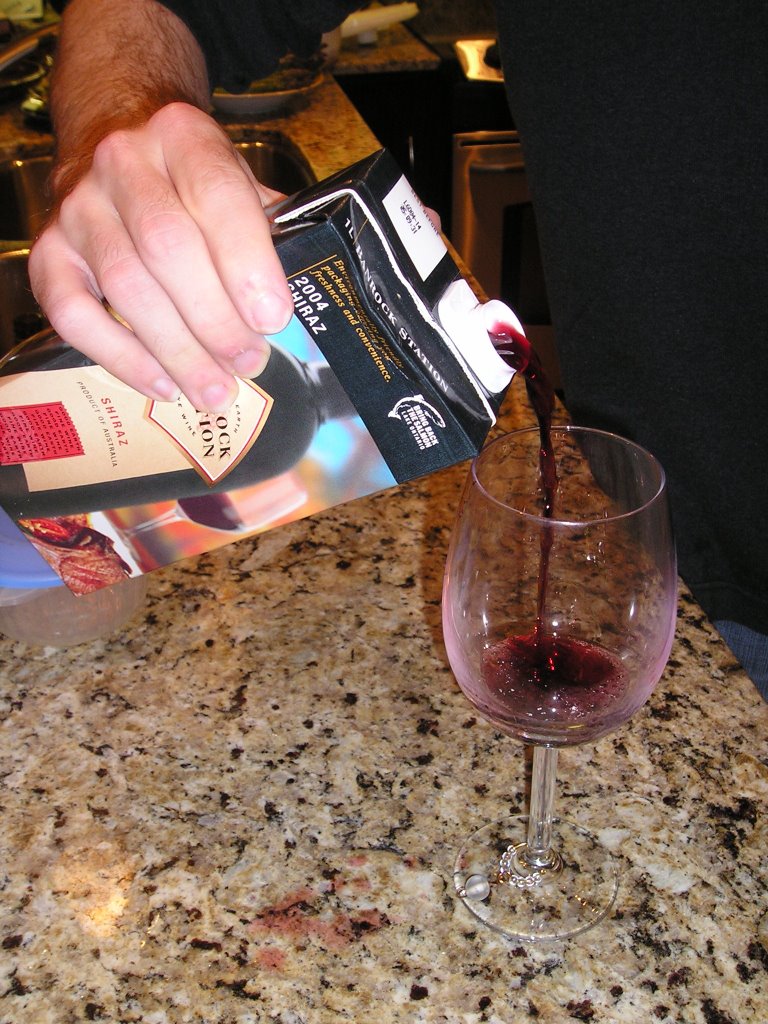
Get it? The idea is that it's still the same stuff inside, kept in the same favourable conditions for ageing, but in more convenient, environmentally-minded packaging. spill test spout trial pouring ease and convenience alternative wine packaging

Well, hold on. Is it convenient? Maybe for mass storage and transportation purposes, but at dinner time...

It was really hard not to slop and dribble (see drips and drops at the bottom of the image, shown at right). And this new kind of packaging takes some getting used to. These juice boxes hold a litre of wine instead of 750 millilitres. And because they are so much lighter than glass containers it can seem like you're serving from a bottomless chalice. Okay, so that might be a plus for some people but I've just perfected evenly distributing a bottle of wine into five glasses.

Before you start thinking me an eco-curmudgeon, convenience is not the only questionable aspect to this kind of packaging. There is some question on its greenness. There's been a lot of words exchanged during the last few months, mainly between the National Post and the LCBO. I defer to Solid Waste & Recycling Magazine Editor Guy Crittenden for what seems to be the required reading on this subject. His piece is a little skeptical (with state-run liquor boards, how can you not be?) but for the most part very perceptive.

Whatever the implications of switching to Tetra Pak packaging, my time in Ottawa was filled with great cooking and good wine. I found a rare 10-year old Muscadet from Le Master de Donatien, tasted the new fantastic new vintage of Perrin Réserve (2004), and ate like a king in the accommodating kitchens of my fantastic hosts Johanna, Cathy and Tyler.

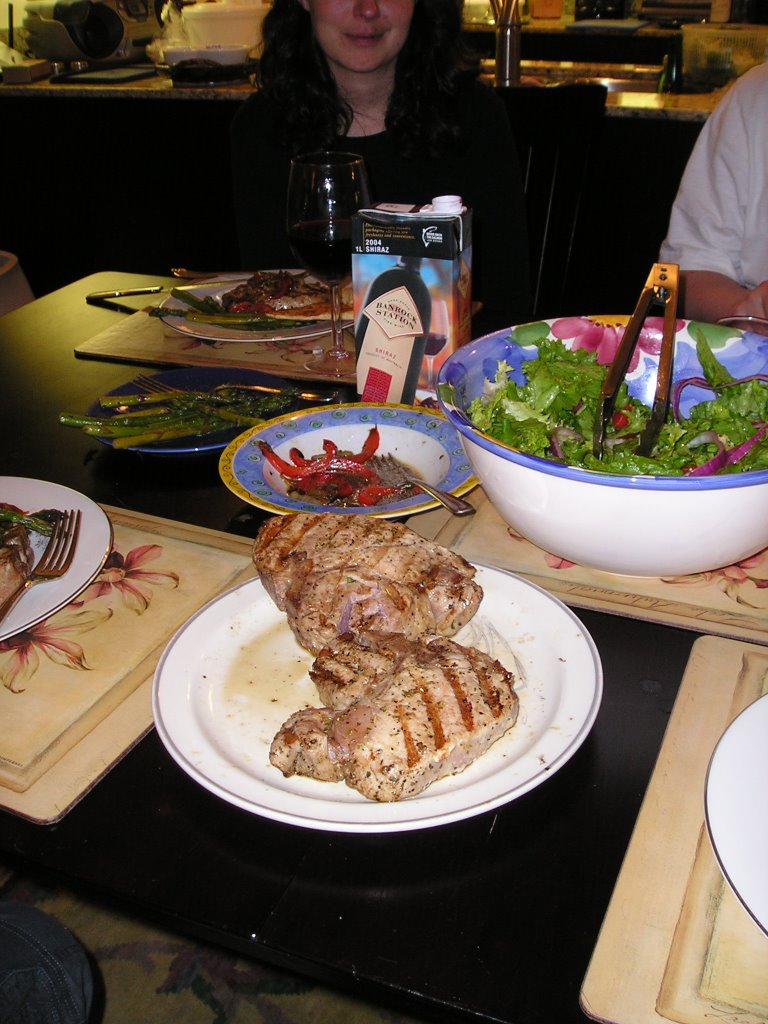
When the three of us finally did taste that box of Banrock Shiraz 2004, it was perfectly delicious with our barbecue fare.

giant barbecued pork chops sauteed peppers asparagus salad
Had the weather been better, the Banrock would've shined as the ultimate outdoor wine. Banrock, which seems to be the creation of fair-weather marketers, is probably best considered fair-weather wine.

20060130

The tchin tchin investigation chugs along

toast to the saq tchin tchinIci, on parle français au sujet des vins: A big "Santé!" to the French media. While all of the English press seems to have totally forgotten about the SAQ scandal (click the image for all the news, served up fresh en français), important findings and analyses are continually being put on the record by French papers and broadcasters. Here's to that.

And here's to writers like Marc André Gagnon. Gagnon, in my mind, is shaping up to be the definitive local voice on wine in Quebec. He maintains a blogue -- which is a French blog -- on the province's wine scene. Packed with even more information, including reviews and an attractive searchable archive, is Vin Québec, an über-site for local wine enthusiasts. At the moment, Gagnon appears to be the main contributor, and a valuable one at that, to the online magazine, which has an interesting Outaouais perspective. This means that the site is a solid source of news on the Ontario market as well as the Quebec one. I really encourage readers to check it out.

Back to "ici"... When did Ici, that little alternative weekly, get its own wine column, penned by Raymond Chalifoux? Perhaps it was sometime around the same moment that the pack-leading Voir stopped running the Stéphane Émond column on wine, which is quite unfortunate since the larger paper had a comprehensive section on living that included food, restaurants and wine. For some reason, neither of these regular Montreal-based chronicles ever get posted online via their newspaper's sites, and they really should. At Ici the wine column is available but you have to download a PDF that comprises the entire publication. How do you say "a minor grumble" in French?

20060117

Jancis to unveil her third wine companion very soon (hope it's me!)

jancis robinson com
Wine writing doesn't get any better than when Jancis Robinson picks up her pen. To me, she is the ideal wine writer. She answers questions and she asks them, and I think that's what sets her above the crowd. She's curious like you or I sitting in our own kitchens wondering about wine, grapes and winemaking. Unlike most of us, she then finds the right person to answer the question (and she is unafraid to delve into controversial issues with industry bigwigs, often getting answers outright, which I respect). It's a simple formula for success.

Simple, once you've gotten yourself into the equation. Obviously Robinson has oodles of accomplishments to her name which allows her access to a wealth of resources. The other day I pored over her summary of the 2004 southern Rhône vintage, a summation of some 220 individual wine analyses she conducted during a recent visit to the region. That's not a wine tasting but a staggering responsibility. Some might say she is privileged to have such a pass into the world of wine (she's undoubtedly earned it through immense study and natural talent), but in all seriousness I think I might throw in the towel after Vacqueryas number 19. Let's be honest. We're talking enormous commitment here.

Content aside, Robinson reports in a manner that is at the same time true to the material and demystifying. She seems at ease conveying complicated processes, intricate ideas, and heavily detailed information. This makes her simply a pleasure to read. But best of all, her prose is transparent. Nothing gets in the way of the point she aims to convey. She is a sound conduit of knowledge.

I can't forget to mention that Robinson goes beyond the role of wine journalist when appropriate. She possesses a singular voice and can express her own personal opinions. Like a pinot nestled in the Côte D'Or, you can very often tell where she's coming from. A favourite moment of mine in which she demonstrates this happens in episode four of her Wine Course. Profiling the Sauvignon Blanc grape, her least favourite variety, she signs off the show admitting her lack of attraction to the grape before tipping into her glass and smirking "...but it is a darn fine refreshment on hot summer's day. Ahhhhh."

There's an approachability to her body of work and her attitude, which is always positive. For example, I didn't expect a personal response to my online query -- certainly not within the day -- but there it was, arriving directly from her desk anyway, full of encouragement and zest. (You yourself can ask the expert).

Now I see her Books webpage has been updated and news of a 3rd edition of The Oxford Companion to Wine is out. I think this teaser was just published last week, in a sinister mention-in-passing kind of way. In any case, it is great news. The new version will update the previous effort from 1999, a volume I've thumbed frequently but held back on purchasing because a revision was due. And since it's set for a late summer release, people like me will have to wait only a little bit longer. A huge recommendation and summer reading to look forward to!

Now if I could only get an answer as to what exactly is sitting in the purple wineglass sketch shown behind her on the website masthead.